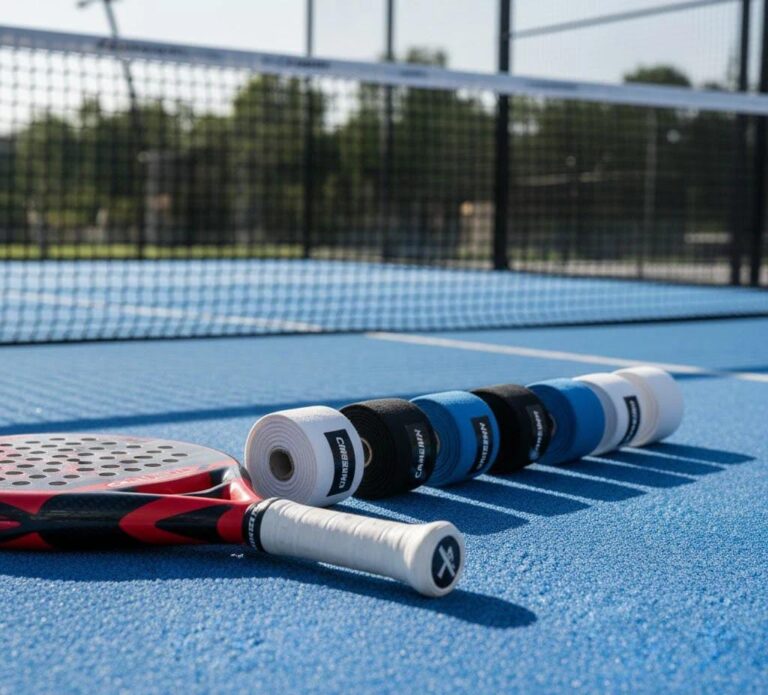
If you’ve walked past a local sports club recently and heard a distinctive pop-pop-pop sound followed by the clatter of a ball hitting glass, you’ve likely encountered Padel. While it feels like this sport appeared out of thin air to take over the UK, its true origin story is a blend of Mexican ingenuity and Spanish high society.
To understand paddle ball properly, you have to look at how people played long before clubs, courts, or official rules existed.
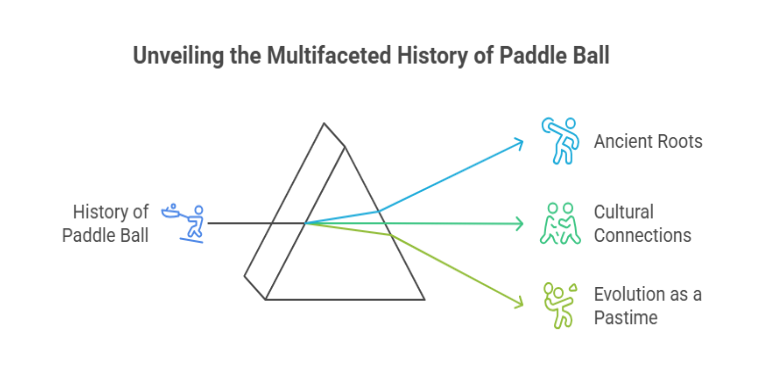
The Origins of Ball and Padel Games
Paddle ball traces back to basic ball and paddle activities played across different cultures. Long before modern rackets, people used flat wooden paddles to strike lightweight balls for recreation.
These early ball and paddle games shared a few common features:
- Instead of modern padel rackets, they used simple padels
- Small rubber or foam balls
- No fixed court size
Children played them in schoolyards. Families played them in gardens. Beachgoers played paddle with ball games along the shoreline. The goal wasn’t competition; it was control, rhythm, and keeping the rally alive.
This simplicity allowed paddle ball to spread easily and adapt to almost any environment.
Paddle Ball’s Development in the United States
The most recognizable early form of paddle ball developed in the United States in the early 20th century. At first, paddle ball appeared as a toy: a paddle with ball attached by an elastic string. Players hit the ball repeatedly to test timing and coordination.
As the game grew, players removed the string and began rallying freely, often against walls. This change marked an important step. Paddle ball shifted from a novelty item to a playable sport using a paddle ball racket and loose paddle balls rather than a tethered setup.
Wall-based paddle ball quickly gained popularity in urban areas where space was limited.
Urban Spaces and the Rise of Paddle Ball Courts
Cities played a huge role in shaping how paddle ball evolved. Players adapted the game to walls, fences, and small open areas. While early paddle ball court layouts weren’t standardised, players used whatever surfaces they had.
These informal courts helped define:
- Faster rallies
- Greater emphasis on control
- Quick reaction play
This wall-based style later influenced other paddle sports, including squash-style training drills and enclosed paddle formats.
Mexico’s Role in Competitive Paddle Sports
A key turning point came in the 1960s in Mexico. Enrique Corcuera built an enclosed court at his home and used wooden paddles to play a wall-based paddle ball game with defined boundaries.
This version introduced:
- Enclosed walls
- Clear court dimensions
- Structured scoring
Although this game eventually evolved into padel, its roots remain firmly connected to paddle ball traditions. This connection explains why modern players often compare paddle ball vs pickleball or paddle ball versus pickleball when trying to understand paddle-based sports.
Paddle Ball vs Pickleball: Why the Confusion Exists
In the UK, searches for paddle ball vs pickleball are common, especially among new players. While both sports use paddles and balls, their origins and styles differ.
Paddle ball:
- Grew from informal ball and paddle games
- Adapted to walls and open spaces
- Focused on rallies and control
Pickleball:
- Developed later with formal rules
- Uses specific pickle ball paddles and a perforated plastic ball
- Plays on a court similar to badminton
The comparison often continues into equipment, where players compare pickle ball paddle designs with traditional padel ball rackets. Despite similarities, the sports evolved along different paths.
Padel Equipment Through the Years
Early paddle ball equipment stayed simple for decades. Wooden paddles dominated, and players used various types of paddle balls depending on location and surface.
As the game matured:
- Paddles became lighter
- Grip comfort improved
- Composite materials replaced wood
Unlike table tennis paddles and balls, paddle ball equipment remained larger and more durable, making it suitable for outdoor and wall-based play. This durability helped paddle ball survive as a recreational sport.
Padel Balls in the UK
One reason paddle ball lasted so long is its flexible approach to rules. Paddle ball rules often changed depending on where and how people played.
Common elements included:
- Continuous rallies
- One or two players
- Minimal scoring systems
This flexibility allowed paddle ball to exist comfortably alongside other sports rather than competing directly with them.
Ball Courts and Informal Play in Britain
While formal paddle ball courts are rare in the UK, informal spaces fill the gap. Players use:
- Sports hall walls
- Outdoor courts
- School playgrounds
This informal setup reflects paddle ball’s origins and explains why it remains popular in coaching and recreational settings.
Padel balls Compared to Other Padel Sports
Modern players often compare paddle ball to pickleball, table tennis, and padel when choosing what to play.
Key differences include:
- Paddle ball emphasises rallies and adaptability
- Pickleball follows structured rules and court sizes
- Table tennis relies on smaller paddles and faster ball speed
These comparisons help players understand where paddle ball fits within the broader paddle sport family.
Why It Still Exists Today
Paddle ball survived because it never relied on expensive courts or complex rules. Players adapted it to their surroundings rather than changing their surroundings for the game.
Its strengths remain:
- Simple equipment
- Flexible play styles
- Easy entry for beginners
Whether played as a beach game, a training drill, or a casual rally, paddle ball continues to hold its place.
Final Thoughts
Padel ball comes from creativity, simplicity, and shared spaces. It grew from early ball and paddle traditions into a flexible sport that influenced modern paddle games worldwide. In the UK, paddle ball remains a quiet but important part of paddle culture, valued for its accessibility and adaptability.
Understanding its origins clears up confusion around paddle ball vs pickleball and highlights why paddle-based sports continue to attract players of all ages.