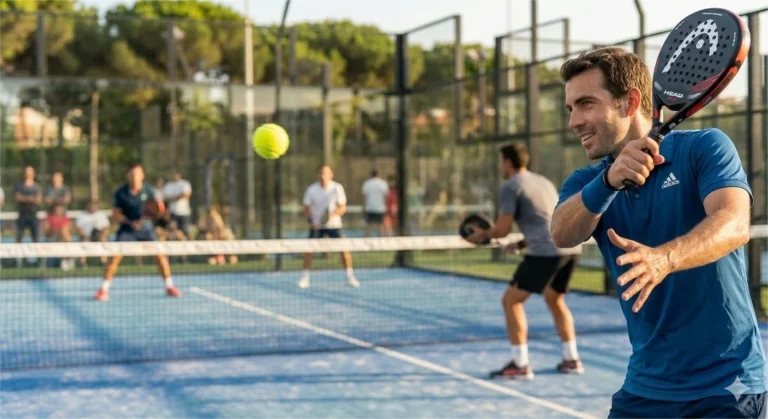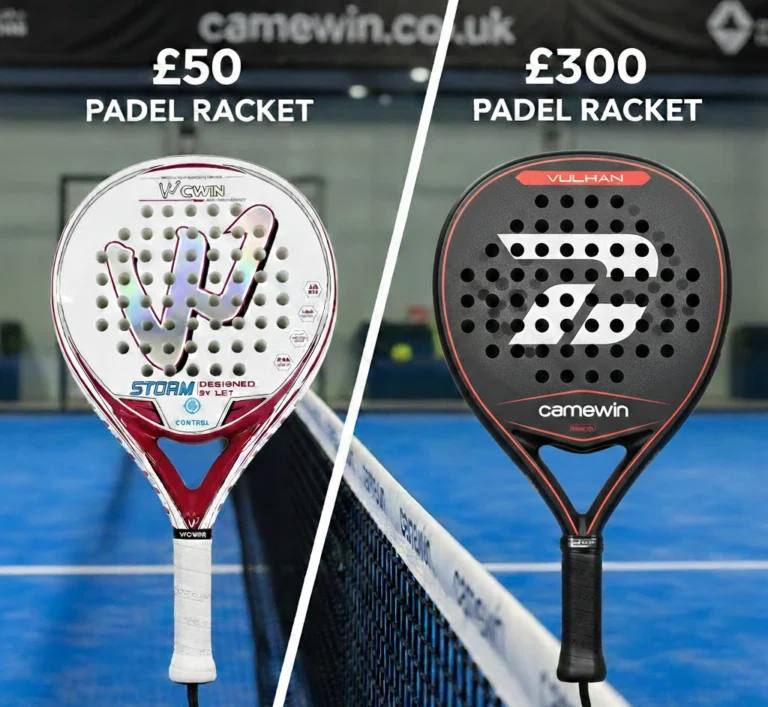
Padel has gained popularity due to its easy-to-learn nature, minimal equipment costs, and accessibility for players of all skill levels.
Padel has exploded in growth because it solves a problem most people have with sports: they want something social, easy to learn, and genuinely fun from day one. You don’t need years of training, elite fitness, or expensive equipment to enjoy it. People walk onto a court for the first time and actually have rallies within minutes — and that instant reward keeps them coming back.
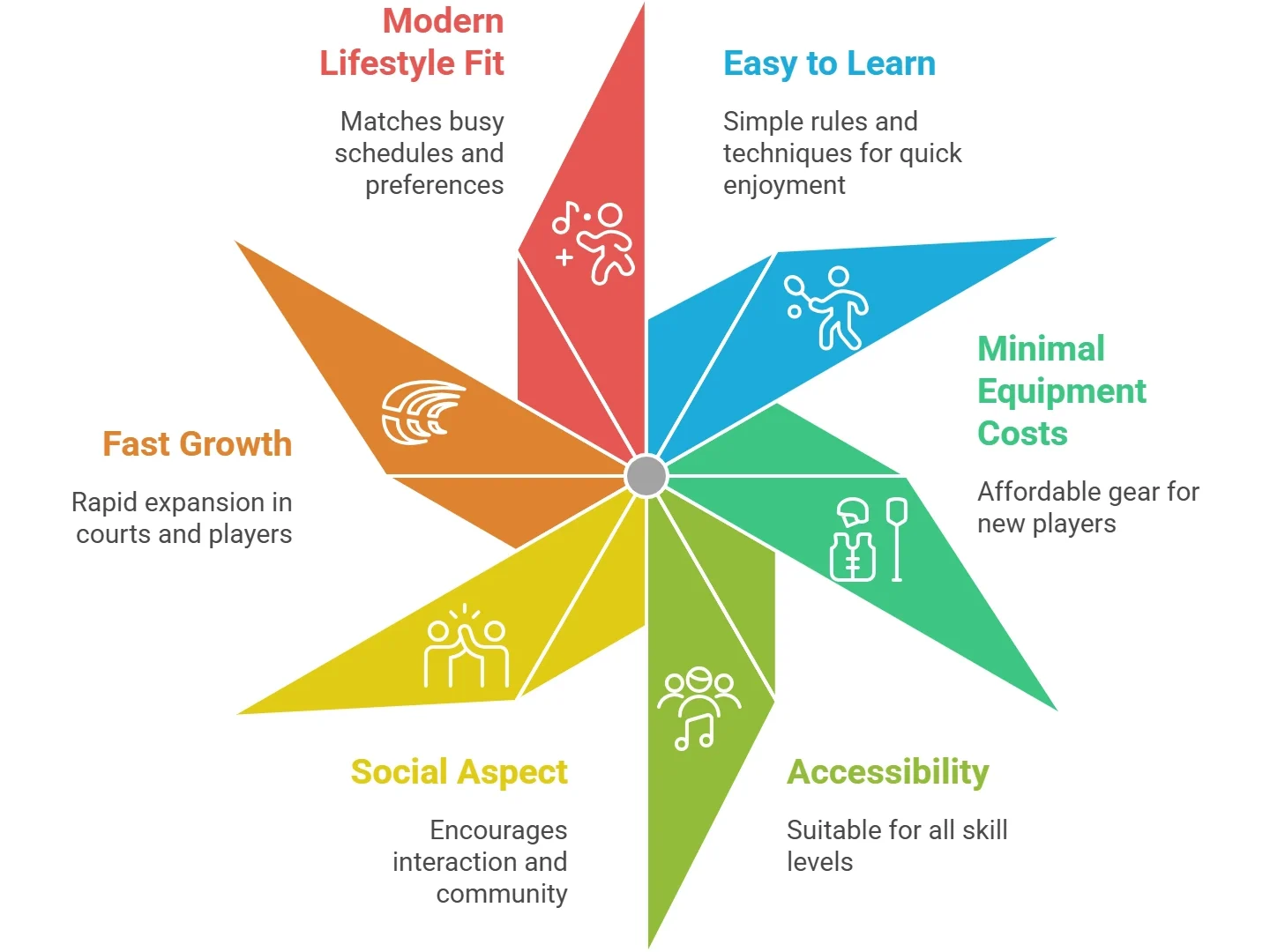
Padel has gained popularity due to its easy-to-learn nature, minimal equipment costs, and accessibility for players of all skill levels.
At the same time, clubs, cities, and investors have rushed to build courts because demand keeps rising. Social media spreads highlights fast, celebrities post matches, and local communities form around clubs. The sport fits modern lifestyles: quick matches, doubles format, strong social vibe, and just enough competition to stay exciting without feeling overwhelming. When you combine accessibility, community, and fast growth in facilities, you get the perfect recipe for a sport that suddenly feels like it’s everywhere.
Let’s break down the real reasons behind the boom.
It’s Easy to Start (and That Matters)
Many sports frustrate beginners. Padel does the opposite.
The biggest driver behind the sport’s rise is how quickly new players feel competent. You can rally on your first day. The walls keep points alive, the court is smaller than tennis, and underarm serves reduce pressure.
People stick with activities that give early success. This game delivers that. Beginners don’t spend weeks chasing balls or missing shots. They enjoy longer rallies, laugh more, and feel part of the action straight away. That first positive experience turns curiosity into a weekly habit, especially when players start with the right gear like beginner-friendly padel rackets.
The Social Factor Is Huge
Four players share every match. That changes everything.People chat between points, rotate partners, and often stay after games for coffee or food. Clubs feel more like social spaces than serious training centers. Friends book courts together, coworkers play after work, and couples join mixed sessions.
In a time when people want real connection away from screens, this sport delivers it naturally and many players upgrade their comfort with padel overgrips and accessories.
Fast-Paced but Not Exhausting
A typical match lasts about 60–90 minutes. That fits easily before dinner, after work, or on weekends.
The game offers action without draining players completely. The smaller court reduces running distance, and rallies rely more on positioning and timing than pure speed.
Players finish matches feeling energized rather than exhausted. This balance attracts adults who want exercise but don’t want to feel wiped out the next day. Busy professionals, parents, and casual athletes can all fit it into their routines.
Players don’t need an entire day. They book a court, play, unwind, and head home. This convenience encourages regular play, which keeps courts full and clubs growing
That accessibility plays a big role in the sport’s rapid global growth across different age groups.
Modern lifestyles reward sports that respect people’s time, especially when players own reliable gear like lightweight padel rackets for quick play.
Courts Are Easier to Build Than Tennis
Cities struggle with space. Traditional tennis courts take up large areas, but these courts are compact and enclosed.Padel courts take up less space and use enclosed walls. Clubs can install multiple courts where only a couple of tennis courts would fit.
You now see courts:
- On rooftops
- Inside warehouses
- In city centers
This flexibility helps the sport grow quickly in urban environments where space costs money. When courts appear in city centers, more people try the game.Availability drives participation.
Rallies Look Good — and Feel Even Better
Long exchanges using the glass walls create exciting points. Even beginners can produce entertaining rallies, which makes the sport fun to play and fun to watch.
Rallies last long enough for everyone to contribute. Clips spread quickly on social media. People see exciting points and think, “That looks fun — I could try that.” Visibility fuels curiosity, and curiosity turns into bookings — and often a search .
Strong Community Culture
Clubs often build strong local communities. Leagues, friendly tournaments, and mix-in sessions help players meet others at similar levels.
New players don’t feel isolated because clubs actively encourage group play. Many people join not just to exercise but to make friends. That sense of belonging keeps courts busy week after week.Sports grow faster when they create community, and this one does it naturally.
Celebrities and Athletes Play It
Athletes like Lionel Messi, Cristiano Ronaldo, and David Beckham aren’t just playing for fun; they use Padel as a “low-impact” way to stay competitive. Unlike tennis or football, Padel is easier on the joints but requires high-speed reflexes and quick decision-making, making it the perfect active recovery sport.
Football Icons Leading the Charge
The football world has almost entirely adopted Padel.
Lionel Messi: Has a private court at his home and often plays with former teammates like Luis Suárez and Pepe Costa.
Zinedine Zidane: He didn’t just play; he invested. His “Z5” sports centers in France now feature premium Padel courts.
Zlatan Ibrahimović: A pioneer in the business side, he launched Padel Zenter, a massive chain of luxury Padel clubs across Sweden and Italy.
Jurgen Klopp & Man City: Many Premier League clubs, including Liverpool and Manchester City, have installed Padel courts at their training grounds to encourage team bonding and tactical thinking.
Tennis Legends Making the Switch
Even the greatest racket players in history are hooked:
Rafael Nadal: His “Rafa Nadal Academy” in Mallorca is now a global hub for Padel training. He frequently plays and has integrated Padel into his academy’s professional curriculum.
Serena Williams: Has been spotted playing at the Spanish Open and frequently enjoys the sport as a social alternative to the high-intensity pro tennis circuit.
Hollywood Presence
Drivers like Max Verstappen, Charles Leclerc, and Lando Norris often play Padel during race weekends to keep their hand-eye coordination sharp.
Hollywood: Celebrities like Antonio Banderas, Eva Longoria, and Hugh Grant are frequent players. Banderas, in particular, has been a long-time advocate for the sport in Spain.
When high-profile athletes choose it as a hobby, it boosts credibility.That influence adds momentum to the trend.
Lower Skill Barrier Than Tennis
Tennis demands precise timing, strong serves, and large court coverage. Many beginners struggle for months before enjoying real rallies.
Here, underarm serves start points gently, walls keep the ball in play, and the smaller court makes coverage easier.
It Feels Competitive Without Feeling Intimidating
Some sports feel serious from the first session. This one feels welcoming. Yes, players compete. Yes, leagues and ladders exist. But the atmosphere usually stays relaxed. Mistakes don’t feel embarrassing. Because players improve faster, they stay motivated. This quick learning curve explains why so many adults pick up the sport even without a racket background.
Clubs Focus on Experience
Clubs Focus on Experience, Not Just Courts
Modern venues often include:
- Music during evening sessions
- Lounges and cafés
- Social tournaments and themed events
People don’t just come to exercise. They come to hang out, meet others, and enjoy the atmosphere often carrying their gear in bags.
Families and Mixed Groups Can Play Together
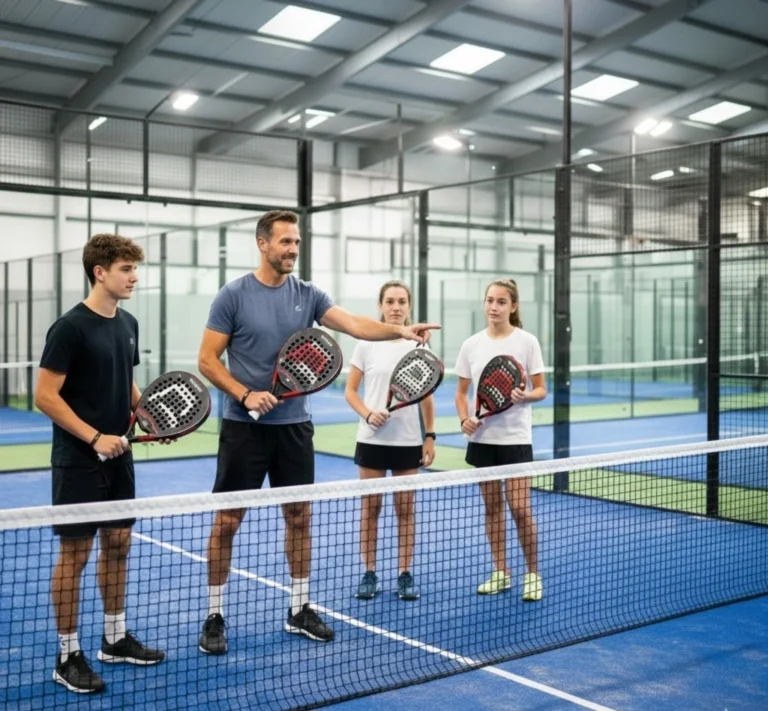
Because success depends on placement and teamwork, not just power, people of different ages and fitness levels can share the court.
Parents play with teenagers. Friends with different abilities still enjoy close matches. That inclusivity leads many families to invest in versatile padel rackets for all levels.
Equipment Feels Approachable
One of the main reasons padel has gained such popularity is how approachable its equipment feels. Unlike many other sports that require specialized gear, padel rackets are designed to be easy to handle, making it simple for beginners to jump into the game and start playing. Here’s why the equipment feels so user-friendly:
Rackets Are Easy to Handle
They are smaller and lighter than tennis rackets, which makes them much easier to handle. This lightweight design benefits beginners and casual players alike, offering better maneuverability. Whether you’re just starting or returning after a break, you won’t struggle with heavy, cumbersome equipment. The rackets’ lighter weight allows you to focus on improving your technique without worrying about handling an unwieldy racket.
Low Maintenance
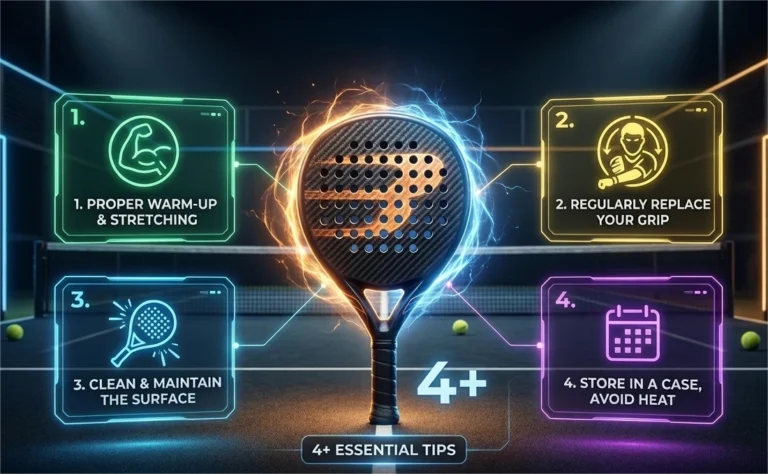
Padel rackets are also low-maintenance compared to other types of sports equipment. Unlike tennis rackets that need frequent string changes and adjustments, it require minimal upkeep. You can use them right out of the box, and the main maintenance tasks involve cleaning and occasionally replacing the grip. This simplicity makes the sport more convenient and appealing for people who prefer to focus on playing, not worrying about gear.
The Learning Curve Keeps Players Hooked
Players improve fast at the start, which feels rewarding. Later, they discover tactics involving wall rebounds, angles, and teamwork. The game stays interesting without becoming frustrating.
As skills grow, players switch to more specialized options like advanced control padel rackets.
Final Thoughts
The rapid growth didn’t happen by luck. The sport welcomes beginners, encourages social play, fits modern routines, and creates strong club communities. It feels fun before it feels technical, and that makes all the difference.
When an activity makes people smile on their first try and keeps them coming back each week, popularity grows naturally and that’s exactly what we’re seeing on courts everywhere.