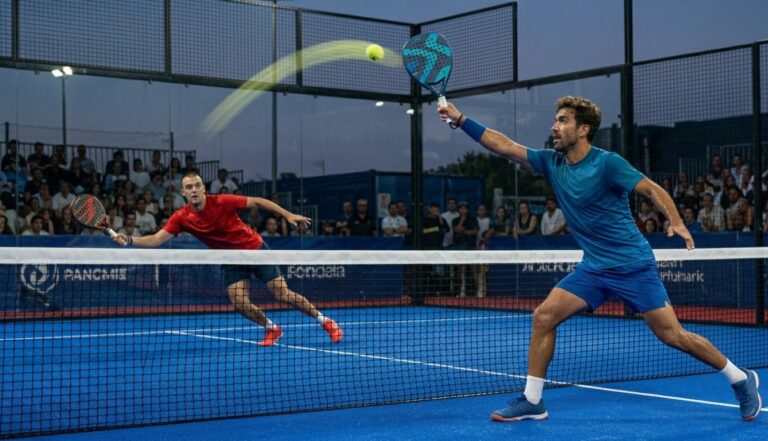
Padel tennis is a racket sport that combines elements of tennis and squash, played on a smaller court enclosed by glass walls. Unlike tennis, players can use the walls to bounce the ball, making the game faster-paced and more strategic. Padel sport tennis is typically played in doubles, where two teams of two compete against each other. The goal of the game is similar to tennis: to hit the ball over the net and into your opponent’s side of the court.
What makes padel tennis unique is how it incorporates walls into the game. This means the ball can rebound off the walls, opening up more angles and shot possibilities, making the game much more engaging. It’s a sport that offers both a physical challenge and a mental one, as players must think several steps ahead to outplay their opponents.
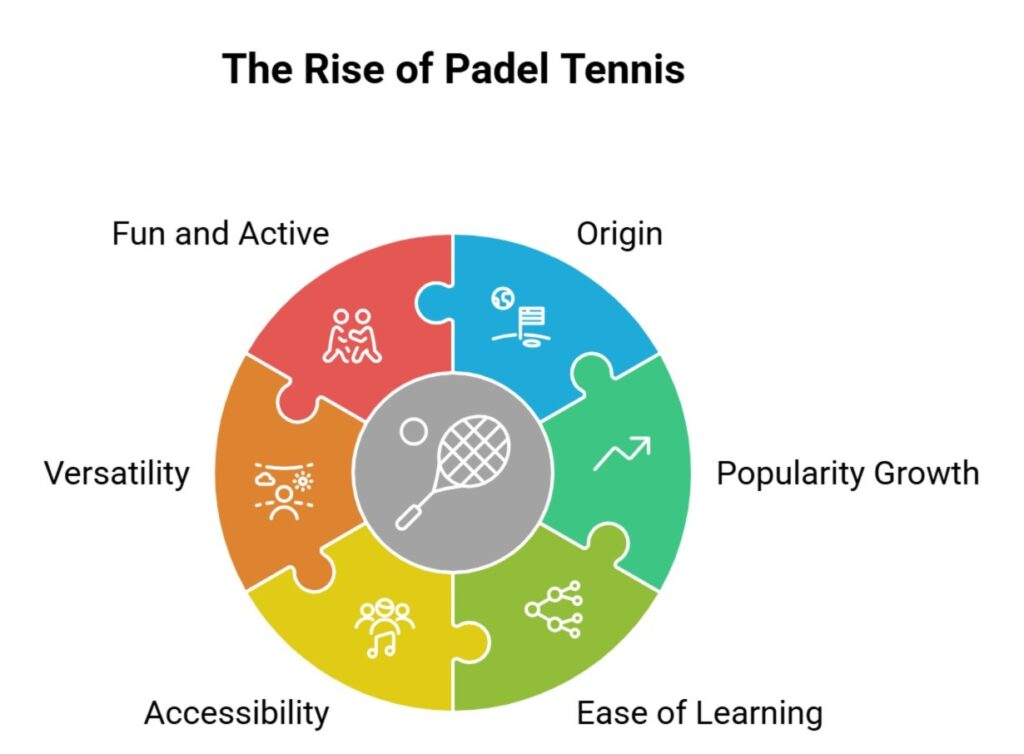
The Rise of Padel Tennis
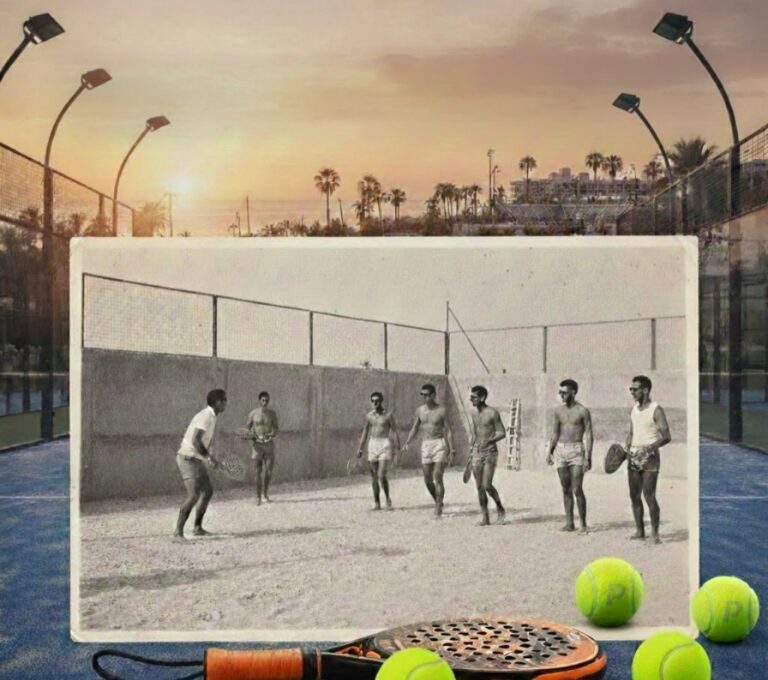
Padel tennis originated in Mexico in the late 1960s and has steadily grown in popularity, particularly in Spain and Argentina. Today, it’s one of the fastest growing sports in the world. What’s driving this growth? People are drawn to the game because it’s relatively easy to pick up compared to traditional tennis, it’s accessible to people of all ages, and it can be played indoors or outdoors, making it versatile in all weather conditions.
The popularity of padel tennis continues to rise globally, with new courts opening in cities around the world. It’s easy to see why more and more people are trying it out ,it’s fun, fast paced, and a great way to stay active.
How to Play Padel Tennis: The Basics
If you’re wondering how to play padel tennis, don’t worry it’s simpler than it sounds. The game is easy to learn, and you don’t need to be an experienced racket sports player to enjoy it. Here’s a step-by-step guide to understanding the game:
Equipment
To get started, you only need a specialized padel racket. Unlike traditional tennis rackets, padel rackets feature a solid, stringless composite material with perforated holes for better control. Their smaller, lighter frame prioritizes precision and maneuverability over raw power. This specific design allows players to react quickly and place shots accurately during fast-paced rallies.
Serving and Scoring
Like tennis, it also require the game to begin with a serve. The server must serve underhand, hitting the ball into the diagonal service box of the opponent’s side. After that, the rally begins, and players take turns hitting the ball back and forth.
Scoring in padel tennis follows the same system as tennis: 15, 30, 40, and game point. If both teams win three games, it’s tied, and the match moves into a tiebreaker.
The Rally and Using the Walls
Once the ball is in play, players must keep it in bounds. The ball can bounce off the walls, but the rally continues as long as the ball doesn’t hit the ground twice on your side or go out of bounds. This is one of the most exciting aspects of the game—since players can use the walls to bounce the ball back into play, the rallies become more unpredictable and strategic.
Winning the Game
To win a match, a team must win two out of three sets. Each set is played to six games, and the team must win by a two-game lead. In case of a tie at 6-6, a tiebreaker game is played to determine the winner of the set.
The Padel Tennis Court Size and Layout
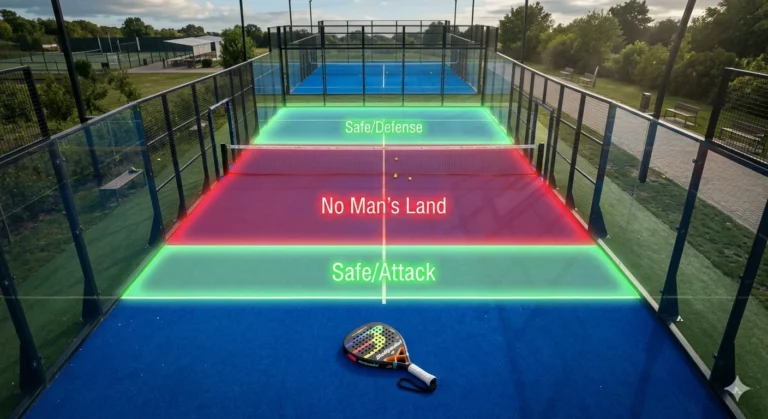
Understanding the layout of the padel tennis court is critical to playing the game.The court is smaller than a tennis court, measuring 20 meters in length and 10 meters in width. The court is divided into two halves by a net, and there are walls on all four sides. The back walls are usually 3 meters high, and the side walls are typically 2 meters high.
The court is marked with service boxes on each side, where the ball must land during the serve. The walls of the court are integral to the game, as the ball can bounce off them during rallies. The smaller size of the court also means that padel tennis requires less running than traditional tennis, making it more accessible for beginners. To get started on these smaller courts, choosing a basic padel racket is ideal as it offers the maneuverability needed for quick rallies.
The Impact of Court Size
The court size has a direct impact on the style of play. Since the court is smaller than a traditional tennis court, players must rely on quick reflexes and strategic thinking rather than long, strenuous rallies. This makes it less physically demanding than traditional tennis, making it suitable for players of all ages and skill levels.
Padel Tennis Rules: Key Points to Remember
Knowing the padel tennis rules is essential for understanding how the game works. Here are the key rules that every player should follow:
- Serving: Every point begins with an underhand serve. You must strike the ball at or below waist level and send it cross-court into the opponent’s diagonal service box. Unlike tennis, overhand serves are not permitted
- Ball Bounces: After the ball bounces on the ground once, players can let the ball bounce off the walls. The ball is still in play as long as it doesn’t land outside the court or bounce twice.
- Overhead Smashes: While the serve is low-power, the rally is not! Overhead smashes are a vital part of Padel. Skilled players use the “Bandeja” or “Vibora” (specialized overhead shots) to maintain their position at the net and force opponents into difficult corners.
- Doubles Only: The game is usually played in doubles, making communication and teamwork key components of the game.
These rules of padel tennis make the game simpler than tennis, yet still require a great deal of strategy, positioning, and teamwork to win.
Why is Padel Tennis Becoming So Popular?
So, why is it gaining so much traction worldwide? There are several reasons for its explosive growth:
- Easy to Learn: It is relatively simple for beginners to pick up. The rules are straightforward, and the smaller court size makes it less intimidating for new players.
- Social Sport: The doubles format makes it a social game. Players can interact with teammates and opponents, making the experience more enjoyable and engaging.
- Less Physically Demanding: Unlike tennis, it is less physically demanding. The smaller court size means players don’t need to run as much, making it more accessible for players of all fitness levels.
- Indoor and Outdoor Play: It can be played indoors or outdoors, making it a year-round sport that can be enjoyed in various weather conditions.
These factors combine to make it a fun, social, and accessible sport for everyone.
What Famous Websites Are Saying About Padel Tennis?
Leading sports websites have also weighed in on its rapid growth:
Forbes reports that Gen Z is helping padel become a major sport, with its growth in court availability and equipment sales surging. The younger generation is embracing padel for its accessible nature and social play.
Major publications like Sports Illustrated have pointed out that padel tennis is one of the fastest-growing racket sports in the world, with a sharp rise in popularity across Europe, Latin America, and the U.S. Experts attribute its rapid growth to its simplicity, social appeal, and ability to be played year-round both indoors and outdoors.
Ready to Try Padel Tennis?
Padel tennis is an exciting, fast-paced sport that combines the best aspects of tennis and squash. Its smaller court size, strategic use of walls, and simplified rules make it an accessible and enjoyable sport for everyone. Whether you’re looking for a fun way to stay active, a new social activity, or a competitive sport, padel tennis is the perfect choice.
Now that you know what padel tennis is and how it works, it’s time to grab a racket and hit the court. With its easy-to-learn nature and thrilling gameplay, padel tennis is sure to become your new favorite sport!
At Camewin, we offer a wide range of padel rackets designed to suit players of all skill levels. Whether you’re looking for your first racket or upgrading your gear, we have the perfect options to help you elevate your game. Explore our premium collection today and find the ideal one for your needs!