No man’s land in padel is the mid-court zone roughly between the service line and the net where players are most vulnerable to lobs, smashes, and power volleys. Staying in this zone is one of the most common mistakes among beginner and intermediate players. Understanding why it’s dangerous (and how to escape it) is essential for moving your game forward.
After playing and analysing hundreds of padel matches at club and competitive level, one pattern keeps coming up: players lose points not because of bad shots, but because of where they are standing when they play them. No man’s land sometimes called the transition zone or mid-court trap is the silent match-killer most players don’t even realise they are falling into.
In this guide, you will learn exactly what no man’s land is, why it’s so costly in padel (more so than in tennis or squash), and four practical, easy-to-implement strategies to get out of it and stay out.
What Is No Man’s Land in Padel?
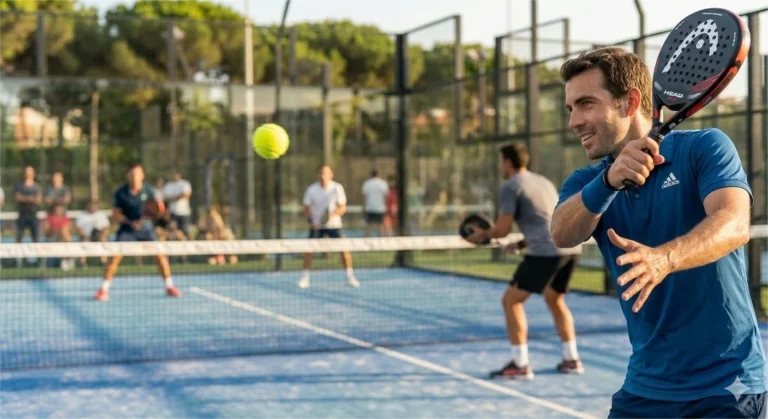
In padel, the court is divided into three functional zones: the back zone (near the glass walls), the net zone (the dominant attacking position near the net), and the mid-court the dreaded no man’s land.
The no man’s land zone typically spans from just behind the net about 2–3 metres back to the service line. When you’re here, you are too far from the net to control volleys aggressively, and too close to properly handle lobs or wall rebounds. You’re caught between two worlds, effective in neither.
Key insight: In padel, the glass walls mean lobs are a legitimate, high-percentage weapon. A team controlling the net can lob over your head into the back wall and if you’re stuck in no man’s land, there’s almost nothing you can do about it. |
Why No Man’s Land Is More Dangerous in Padel Than in Tennis
If you have come from a tennis background, you might underestimate just how harmful this zone is in padel. Here is a direct comparison:
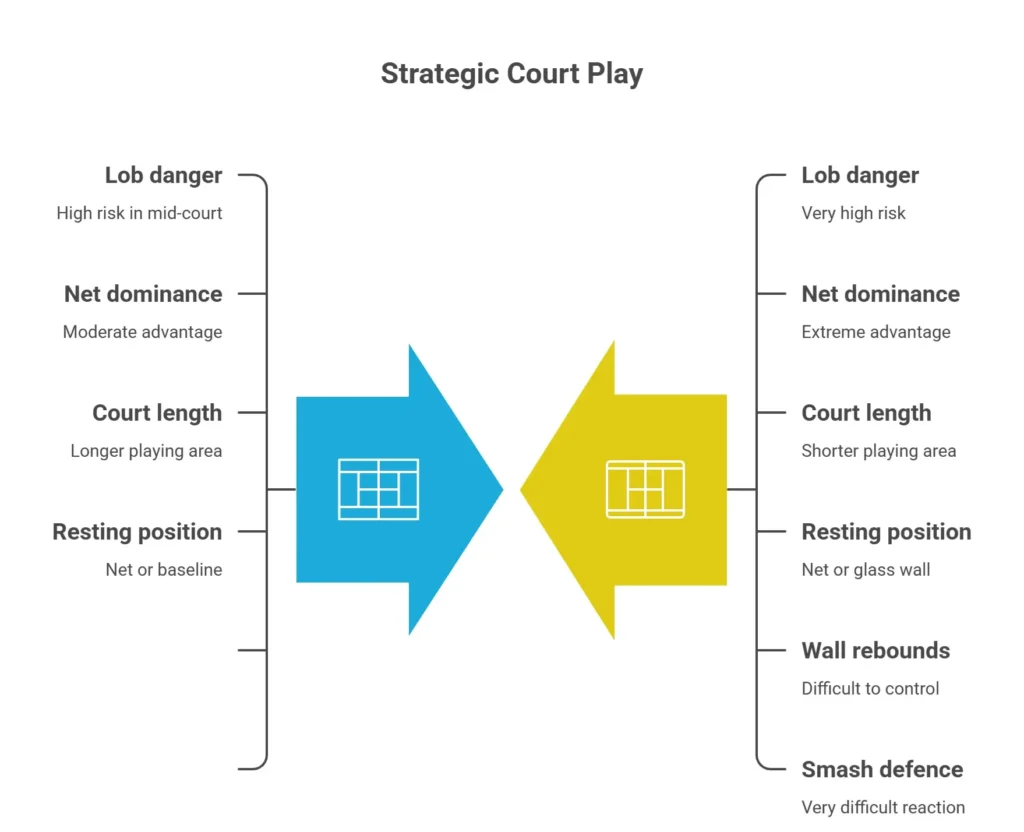
The enclosed padel court and shorter distance between baseline and net makes the mid-court an even bigger liability. A well-placed lob from your opponents sends the ball into the back glass at pace and if you have not retreated, the point is almost always lost.
4 Easy Ways To Avoid No Man’s Land in Padel
From testing these principles across different levels of play from beginners to seasoned club competitors these four methods work consistently. Apply them deliberately until they become automatic.
Commit fully — advance to the net or retreat to the glass
The golden rule of padel positioning is simple: never stop halfway. When you move forward after a shot, commit all the way to the net (roughly 1.5–2 metres from the net tape). When the lob goes over your head, retreat decisively to the back wall.
A common mistake is taking a half-step forward after a good shot close enough to tempt you into a volley, but too far back to defend a lob. Use the service line as your mental trigger: if you are crossing it forward, keep going. If you’re behind it and a lob is coming, keep going backwards.
- Train yourself to move in two gears: all-in at the net, or fully back at the glass.
- Avoid the “frozen halfway” reflex, especially after a return or bandeja.
- Communicate with your partner to split responsibilities one covers net, one covers lobs.
One reason beginners hesitate in the mid-court is a lack of confidence in their equipment’s defensive capabilities. If you are still mastering your footwork, using a Basic Padel Racket with a larger sweet spot can give you the forgiveness needed to play a deeper lob and escape no man’s land safely
Use the lob deliberately to reset your position
If you are caught in no man’s land either through a forced situation or a positional mistake the smartest shot in your arsenal isn’t a smash or an aggressive drive. It is a high defensive lob.
A well-executed lob buys you 2–3 seconds to retreat to the back glass wall. It neutralises your opponents’ net advantage and resets the rally. After testing multiple tactical reset options, the defensive lob consistently outperforms the drive or block when you’re off-position in the transition zone.
- Aim for depth a short lob gifts your opponents an overhead smash.
- After the lob, sprint to the back corner: right or left wall depending on trajectory.
Do not panic-volley from mid-court. Lob first, reposition, then attack.
Read the play and move before the ball is hit
Reactive movement in padel is too slow. By the time you see the lob, it is already above your head and if you’re in no man’s land, you have already lost the point. The fix is anticipatory positioning: reading your opponent’s body, racket face, and stance before contact.
Experienced players know when a lob is coming open racket face, stepping back, weight shifting backwards. When you spot these cues, don’t wait: start retreating immediately. This is known as reading the opponent’s “telegraphing,” and it’s one of the key cognitive skills that separates intermediate from advanced padel players.
- Watch the opponent’s shoulder and wrist open face = likely lob.
- Practise the “split step” just before your opponent strikes, so you can move in any direction.
Study your opponents in the warm-up: do they lob under pressure? How high? Adjust accordingly.
Improve your net approach game to minimise transitions
The best long-term cure for no man’s land is reducing how often you enter it in the first place. Most players drift into mid-court because their net approach shots are weak they play a shot that doesn’t force the opponent back, then instinctively follow it up without the right shot quality to safely advance.
Work on your approach volley the punching, compact forehand or backhand volley played low and angled so that when you do move forward, you do so on your terms. A strong approach shot pins opponents deep, making their lob shorter and easier to handle if it comes.
- Use the bandeja or vibora as an approach shot both control depth and allow forward movement simultaneously.
- Only advance to the net behind a shot that lands deep in the opponent’s half.
Do not rush the net after a weak return wait for the right ball before committing forward. Dominating the net requires an approach shot that forces your opponent deep into their own corners. For players looking to transition faster and hit more precise bandejas, using Advanced Carbon Fiber Rackets provides the necessary stiffness and ‘pop’ to keep the ball low and unplayable, ensuring you never get caught in no man’s land
Positioning Drills To Practise Court Awareness
These drills directly target the mid-court trap and help build automatic positional habits
- Two-position rally drill: Players must only stop at net or back glass no pausing in the middle. Feeder lobs randomly to reinforce retreat instincts.
- Lob-and-follow drill: After every defensive lob, physically sprint to the back wall before the ball lands. Builds the habit of retreating immediately after a lob.
- Shadow movement: No ball just practise footwork patterns, stepping forward to net then retreating to glass, with emphasis on decisiveness and speed through the mid-court zone.
- Approach shot + advance drill: Hit a deep approach shot (bandeja or drive), then advance all the way to the net. Coach verifies shot depth before player is allowed to advance.