In padel, the net is not just a position it is a weapon. The pair that controls the net controls the point. Yet a significant proportion of club players spend most of their matches glued to the baseline, reacting to shots rather than creating pressure. Understanding why you should run to the net in padel and when is the single tactical shift that produces the fastest visible improvement for players at every level from beginner to competitive club.
These 5 reasons are not abstract theory. Each one is grounded in the geometry of the padel court, the physics of the volley, and the patterns observed at the highest levels of the professional game through 2025 and into 2026. Read them once and you will never look at a baseline rally the same way again. Every second you stay at the baseline is a second your opponent has to breathe. Move to the net and take that air away.
REASON 1: You Control the Angles And the Court
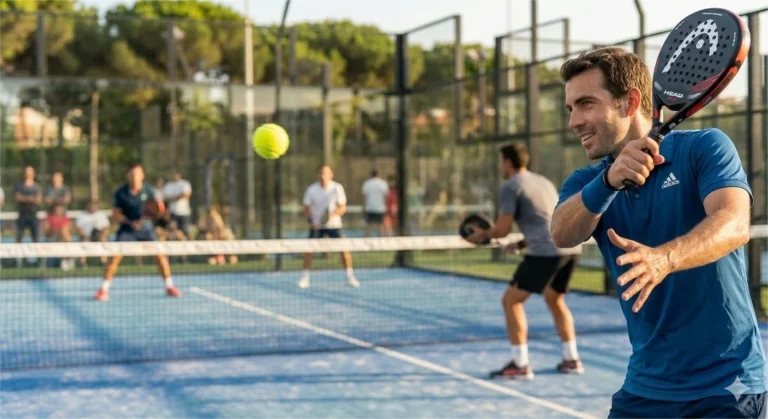
The padel court is 10 metres wide. From the baseline, you can cover your half adequately but your volleys and shots travel a longer distance to reach the opponent’s court, giving them more time to react. From the net, the court effectively shrinks. Your volleys arrive faster, the angles become sharper, and the spaces you can target grow dramatically.
A volley hit from 1 to 2 metres behind the net reaches an opponent at the baseline in under 0.4 seconds. A groundstroke hit from the baseline takes 0.8 to 1.2 seconds to travel the same distance. That difference roughly half a second is the gap between an opponent who is pressed and an opponent who is comfortable. Net position makes every shot you hit more dangerous simply because of where you are standing.
 Tactical Insight: The further forward you stand from the net (within the non-volley zone rules), the sharper the cross-court angle you can create. A volley played from 1.5 metres behind the net opens angles that are geometrically impossible from the service line or baseline.
REASON 2: You Force Your Opponents to Hit Up Giving You Easy Put-Aways
This is the most underappreciated mechanical advantage of net position in padel. When you stand at the net, your opponents must lift the ball over you which means almost every return they make arrives at a height that is manageable for a volley or overhead. When you stand at the baseline, opponents can drive the ball flat and low, keeping it below your waist and forcing you into uncomfortable, upward angled replies.
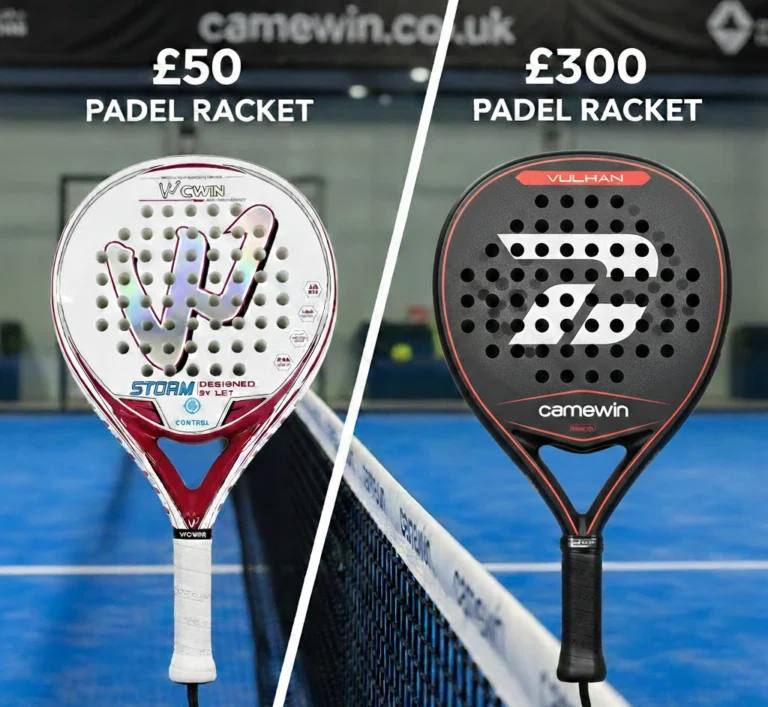
Net position structurally forces upward shots from your opponents, which are easier to handle. For players just starting to master their net game, using a Basic Padel Racket is ideal because it provides the large sweet spot needed to return these balls with consistency and confidence. an overhead opportunity one of the highest-percentage attacking shots in padel.
- A topspin pass attempt: Rises predictably and arrives at chest to shoulder height ideal for a punch volley.
- A desperate low cross-court:Still has to clear the net by some margin giving you a mid-height volley to redirect.
💡 Key Principle: Every ball your opponent hits while you are at the net must travel upward at some point to clear the net. Upward means slower. Slower means more time for you and less time for them. Net position turns physics into your ally.
REASON 3: You Put Your Opponents Under Time Pressure They Cannot Handle
Time is the most valuable resource in padel. At the baseline, your opponents have time to set their feet, choose their shot, and execute it with composure. At the net, you remove all of that. A well-positioned pair at the net reduces the time an opponent has to make a decision from over one second to under 0.4 seconds a reduction that causes a predictable cascade of errors even from technically capable players.
This is the core reason why the best pairs on the 2025 Premier Padel and World Padel Tour circuits move to the net on the first realistic opportunity in every rally. It is not about playing faster themselves it is about making their opponents play under conditions that make clean execution nearly impossible.
The Decision Window
Cognitive sports science research consistently shows that players make significantly worse decisions when their available response time drops below 0.5 seconds. Net position in padel routinely creates exactly this condition. The pressure is not physical it is cognitive. Your opponents are not slow. They simply do not have enough time to think.
REASON 4: You Win More Points With Less Physical Effort
This reason matters more than most players acknowledge. A baseline rally in padel is physically expensive. Each groundstroke requires a full hip rotation, explosive footwork, and complete body engagement. A well-placed volley at the net requires only a fraction of the energy of a groundstroke. To get that perfect balance between redirection and power without over-exerting yourself, an Intermediate Padel Racket offers the right carbon-fiber blend to help you finish long matches feeling fresh
Over a 90-minute match with three sets, this efficiency compounds significantly. Pairs who dominate the net tend to finish matches fresher which means their shot quality and decision-making remain higher in the third set when baseline players are fatiguing. In close matches at club level, physical freshness in the final set is often the deciding factor.
- Volleys require 30–40% less muscular output than groundstrokes at equivalent pace they redirect pace rather than generate it.
- Shorter points mean less total court distance covered net pairs typically run 15 to 20% less per match than baseline-dominant pairs.
- Less fatigue means better decisions late in matches the compounding effect of net efficiency is most visible in the final set.
⚡ Fitness Note: If you find net play exhausting rather than efficient, the issue is usually your approach shot you are arriving at the net off balance and scrambling to cover. A clean approach shot followed by a composed volley is physically very low cost. Work on the transition, not just the volley.
REASON 5: It Dominates the Psychology of the Match
Padel is as much a mental game as a physical one and net position wins the psychological battle before a single shot is played. When both players of a pair advance to the net together, they fill the opponent’s visual field. The court behind them looks open; the pair at the net looks imposing. This is not imagined pressure. It is documented in sport psychology research as spatial dominance the measurable effect of occupying visual and physical space on an opponent’s decision-making.
Players who consistently charge the net send a clear message with their body language: they are in attack mode, they expect to win this point, and they are dictating the terms of the rally. Players who stay at the baseline send the opposite message they are waiting, reacting, and handing the initiative to their opponents. In tight matches, this psychological dynamic shapes the outcome as much as technical execution.
What Net Dominance Looks Like in 2026
The most successful pairs on the Premier Padel Tour in 2025 including the partnerships of Galan-Lebron and Coello-Tapia averaged net position on over 68% of all rally shots. At club level, the pair that gets to the net first in a rally wins that rally at a dramatically higher rate. This is not coincidence. It is the architecture of padel working exactly as the sport was designed.
🧠 Mental Game Tip: Before every return game, make a deliberate decision: ‘We are going to the net on the first short ball.’ Having a preset plan removes hesitation and hesitation is what keeps most club players stuck at the baseline when the opportunity to advance is right there.
How to Actually Get to the Net — The 3 Right Moments
Knowing why to go to the net is half the battle. Knowing when is the other half. Going forward at the wrong moment hands your opponents an easy lob or passing shot. These are the three highest-percentage moments to advance:
- After a deep return that pushes opponents back:Any ball that lands within 1 metre of the back glass is an invitation to advance. Your opponents are out of position and must hit up.
- After a strong serve or serve-and-volley sequence: In padel, the serving pair often starts at the net after a well-placed serve. Do not retreat hold that position and volley the return.
- After your partner plays a quality lob: When your partner lobs successfully and opponents are forced back to smash, both of you should step forward immediately. The smash will come but you will be in position to return it from the net.
For net play to be effective, you also need a racket with enough touch to direct volleys precisely under pressure. See our best padel rackets for net play and control for our 2026 picks, and our padel volley technique guide for the mechanics behind clean net execution.
Final Word: The Net Is Where Padel Points Are Won
The five reasons above are not five separate arguments they are five dimensions of the same truth. Net position gives you better angles, forces weaker returns, reduces opponent decision time, costs you less physical energy, and dominates the psychological dynamic of the match. That is not a marginal advantage. That is a structural one.
The next time you are in a rally and a short ball lands at your feet, do not play it safe from the baseline. Take two steps forward. Close the net. And let the geometry of the padel court do what it was designed to do reward the pair that is brave enough to claim it.
In padel, the net is not where you go when you are winning. It is how you start winning in the first place.