When it comes to playing padel, the racket you use can significantly impact your performance. As someone who is been playing for years, tested countless rackets, and faced fierce competition on the court, I can tell you choosing the right padel racket isn’t just about picking the first one off the shelf. A good racket needs to match your playing style, enhance your strengths, and give you the control and power you need to dominate the game.
In this post, I will break down the key features that make a good padel racket and how you can use this knowledge to find the best one for you. Whether you are a beginner just starting out or an experienced player looking to upgrade, understanding the important aspects of a racket can take your game to the next level.
Material Matters: What is Inside Counts
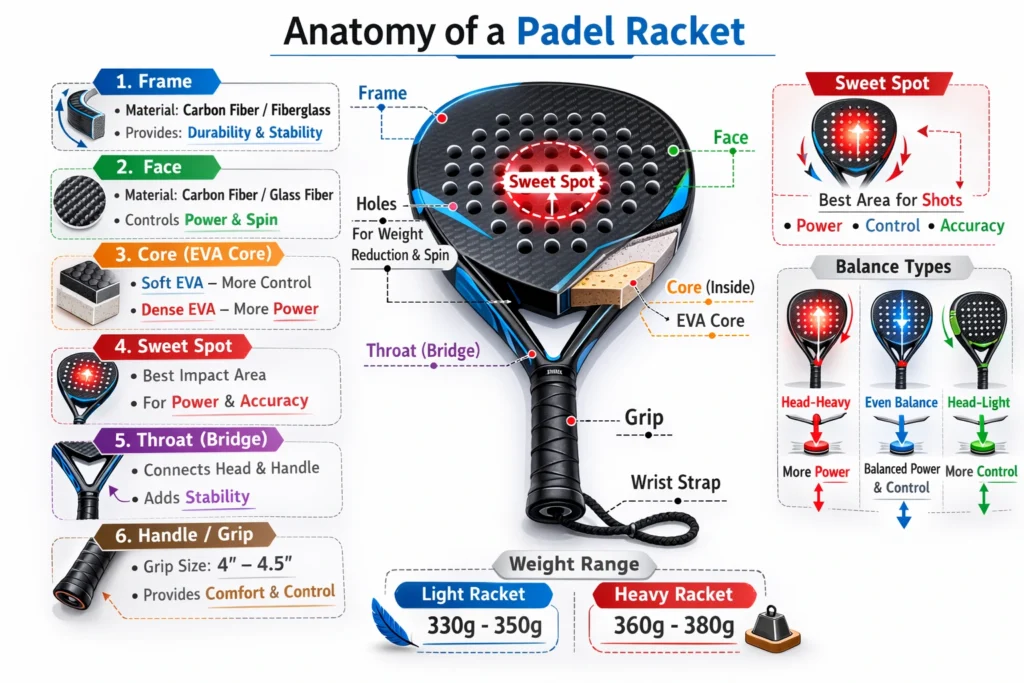
When you pick up a padel racket, the first thing you will notice is its weight and feel. But the material used to construct the racket plays a huge role in how it performs. In my experience, the combination of materials determines the racket’s durability, flexibility, power, and overall comfort.
Carbon Fiber vs. Fiberglass
Carbon Fiber: If you’ve seen advanced players hitting blistering smashes and precise shots, it’s often because their rackets are made of carbon fiber. This material is incredibly strong and lightweight, allowing for more power and stability in your shots. It’s the go-to material for experienced players who want to generate power without compromising on control.
In 2026, most high-end rackets use Carbon Fiber, but the “K” rating (the number of carbon filaments per thread) changes the feel entirely:
3K Carbon: The “all-rounder.” It is flexible and provides a softer touch. Great for players who want a “poppy” feel without a rigid impact.
12K Carbon: The sweet spot for intermediate-to-advanced players. It is stiffer than 3K, offering a massive boost in power for volleys.
18K/24K Carbon: The “Pro” choice. This is extremely rigid. Warning: If you do not hit the sweet spot consistently, 18K will feel like hitting a ball with a brick. It requires high swing speed to “activate” the power.
Fiberglass: On the other hand, fiberglass is softer and more flexible, which makes it more forgiving. This material is generally used in entry-level and mid-range rackets, perfect for beginners who want to focus on control and comfort. It absorbs more shock, which reduces the stress on your arm, making it easier on the joints.
Why It is Important:
The material not only affects how the racket plays but also how it feels when you hit the ball. For someone who’s been playing for years, carbon fiber feels more responsive and allows for better power, but a fiberglass racket feels more forgiving and is easier on the arm. For me, choosing the right material depends on whether I need more control (fiberglass) or more power (carbon fiber).
Weight & Balance: Power or Control?
When I was just starting out, I was all about the light racket. It was easier to swing, and I could react quicker, especially when playing at the net. But as my technique improved, I found that a slightly heavier racket with a head-heavy balance gave me more stability and power.
Light vs. Heavy Rackets:
Light Rackets (330g-350g): These are great for beginners and intermediate players who want to focus on speed and maneuverability. Light rackets are ideal for volleys and quick exchanges at the net. They are easy on the arm and allow you to get the ball over the net with more precision.
Heavy Rackets (360g-380g): If you are ready to take your game to the next level and focus on powerful groundstrokes or smashes, a heavier racket might be for you. These rackets offer more stability and power, but you will need to have a bit more strength and control in your swings. For advanced players, heavy rackets provide better control over the ball and allow you to place shots with more precision.
Balance Types:
Head-Heavy: A racket with more weight in the head helps generate power. It is perfect for players who rely on aggressive shots like smashes.
Head-Light: This balance helps with quick reactions and volleys, making it a better choice for defensive players or those who like to be quick at the net.
Even Balance: Offers a blend of control and power, suitable for players who need versatility.
Pro Tip: The best way to find the right weight and balance is to test different rackets and see how they feel during practice. Start with a lighter racket if you are a beginner, and gradually experiment with heavier rackets as you develop your strength and technique.
Shape: What is Your Play Style?
The shape of your racket directly impacts how you will perform, especially when it comes to control and power. I’ve experimented with all three shapes, and each one brings its own set of advantages.
Round, Teardrop, and Diamond:
Round: Round rackets are great for beginners and control players. They provide a larger sweet spot, making it easier to return the ball consistently. The round shape offers excellent forgiveness on off-center hits and is perfect for those who want more precision than power.
Teardrop: This shape offers a balance of power and control.I find teardrop-shaped rackets versatile, perfect for players who like a combination of both. It’s ideal for intermediate players looking to hit deep shots while maintaining some control.
Diamond: If you are an advanced player looking to smash or hit powerful groundstrokes, the diamond-shaped racket is what you need. The smaller sweet spot demands more precision but rewards you with extra power. It is excellent for aggressive players who rely on hitting deep shots and need that extra punch.
Pro Tip: I always recommend a round shape for beginners because it is more forgiving. Once you’ve gained confidence and control over your shots, consider transitioning to a teardrop or diamond shape to increase your offensive game.
Grip: Comfort and Precision
Choosing the right grip size and material is essential for comfort and precision. A poorly sized grip can lead to blisters or wrist strain, which can ruin your game and even cause long-term injury.
Grip Size:
Too small a grip will make it harder to control your racket, and you might overcompensate with your wrist.
A grip that is too large will be uncomfortable and could cause hand fatigue, affecting your ability to react quickly.
Grip Materials:
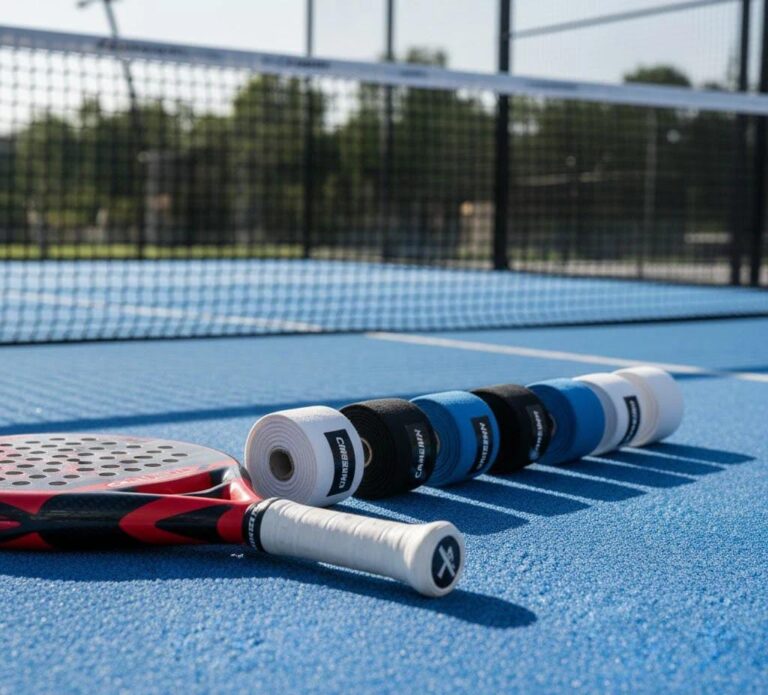
Most rackets come with synthetic leather or cushioned grips. Over time, as I have played in different conditions, I have learned that comfort is key especially during long matches. A rubberized grip can help maintain a firm hold while also absorbing sweat, giving you better control during those crucial points.
Pro Tip: Before you buy, try out different grip sizes and feel the comfort level. A grip that fits your hand well will improve your control and reduce the risk of injury
Vibration Dampening: Protecting Your Arm
If you are someone who is suffered from elbow pain or tennis elbow, the vibration dampening system of a racket can be a game changer. Excessive vibrations can be tough on your joints, especially after long sessions.
Vibration Dampening Systems:
High-end rackets typically come with built-in dampeners that reduce vibrations during impact. These rackets are easier on your arm, especially when hitting hard shots or playing multiple sets. For players with elbow or shoulder issues, investing in a racket with good dampening technology is a smart choice.
Pro Tip: Consider adding a vibration dampener to your racket if you are prone to joint discomfort. It would not affect your performance and can save you from injury in the long run.
Conclusion: Finding Your Perfect Padel Racket
A good padel racket is about finding the right combination of materials, weight, balance, shape, and grip to suit your game. Whether you prioritize control, power, or comfort, the perfect racket will help you dominate the court. After all, it’s not just about the racket it is about how it enhances your technique and complements your playing style.
Remember, I have always believed that the best racket for you is the one that feels like an extension of your arm. So, take your time to try different options and choose one that allows you to play confidently and comfortably. The right racket will not only improve your performance but also make padel more enjoyable.