If your padel game has hit a ceiling , you train regularly, you play consistently, but you keep losing the same points in the same situations then the problem is not your fitness or your shot technique. The problem is in your habits and the habits destroying your padel game are invisible precisely because they feel normal. You have practised them so many times that they are now automatic. You do not notice them mid-rally. But your opponent does because they cost you the point, every single time.
This is not about beginner errors.This is about the deeply embedded patterns that sit inside the games of intermediate and advanced club players the ones that are almost impossible to self-diagnose without knowing exactly what to look for.
Every player reading this will recognise at least two of these in their own game. The honest ones will recognise four.
Habit 1: Standing Still at the Wrong Moment
Padel is a game of continuous micro-movements. The split step , a small explosive hop timed to your opponent’s contact point is the foundation of every clean defensive recovery and every crisp net volley. Most club players know this. Almost none of them execute it consistently under match pressure.
What happens instead is this: you watch the ball travel to your opponent, you anticipate the direction, and you start moving before they contact it. You skip the split step. You arrive at the shot on a moving, unbalanced foot and the shot lacks control, depth, or pace. You blame your technique. The real problem was your feet, thirty centimetres before the ball arrived.
Why It Becomes a Habit
The reason players skip the split step under pressure is that moving early feels proactive. It feels correct like you are reading the game well. The split step feels like a delay. Your brain interprets it as hesitation. This is exactly backwards. The split step is what makes your movement explosive. Skipping it makes your movement early but slow.
Match Impact: Players who consistently miss the split step lose an estimated 15–20% of their net exchanges to flat-footed contact. You are not making net errors you are arriving at net incorrectly.
The Fix
- During warm-up rallies, say ‘now’ out loud every time your partner contacts the ball. This forces conscious timing.
- Watch the feet of the best player in your club at net. You will see a small hop before every shot , without exception.
- Practice split step timing in isolation: feed balls from the baseline, step into the net, execute a split step before the feeder contacts, then volley. The split step must come before contact not after.
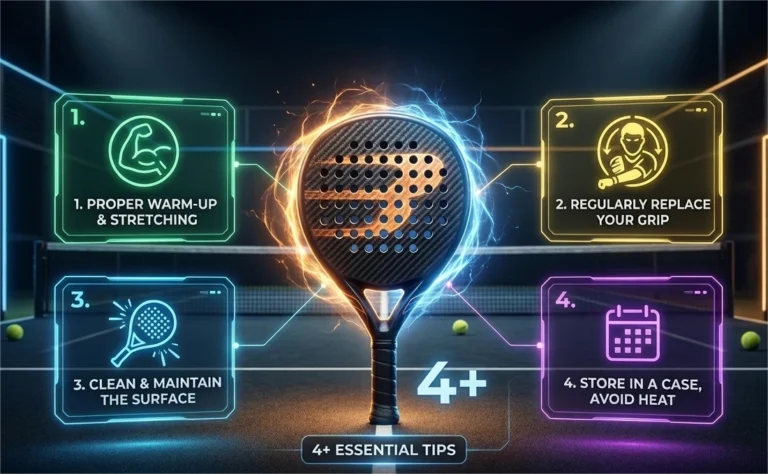
Executing these sharp, explosive micro-movements consistently is nearly impossible if you step onto the court with cold joints. To ensure your feet and leg muscles are responsive enough to nail your split step timing from the very first rally, make sure you follow a structured padel warm up routine before match play begins
Habit 2: Playing the Ball Instead of Playing the Position
Singles instincts do not transfer cleanly to padel doubles. In singles tennis or squash, you chase the ball. In padel doubles, your primary job is to maintain your positional pair with your partner — and then play the ball. Most intermediate padel players invert this priority completely.
They move to the ball firstand leave their partner either doubled up or exposed. The result is a court that looks like two individual players sharing a space, not a unit covering the court as a coordinated pair. Every gap your movement creates is a gap your opponent will find.
The Pattern That Reveals the Habit
Watch where you and your partner end up after a defensive shot from the back glass. If one of you is in the service box and one is in the back court every time you have a positional habit problem. The correct response after a defensive clear is both players retreating to the baseline together, holding the side-by-side structure, then building back into the point.
The most common version of this mistake: your partner retrieves a low ball from the back corner, and you drift forward anticipating the lob. You end up at the service line. The lob clears you both. You were playing the ball and leaving the court open.
📊 Data Point: A 2025 padel performance tracking study found that positional breaks defined as the pair being more than 3 metres apart laterally occurred on 71% of points won by the attacking pair in club-level doubles. Staying together is a defensive weapon.
The Fix
- After every shot, check your partner’s position before moving. Literally glance. This builds the habit of pair-awareness over ball-chasing.
- Agree on a verbal cue ‘back’ or ‘hold’ to signal positional resets mid-rally. Communication is positioning in padel.
- Review your match on video if possible. Watch only your feet and your partner’s feet not the ball. The pattern becomes immediately visible.
Habit 3: The Service Box Volley
There is a specific type of club padel player who dominates their baseline play, punishes weak lobs, and still loses matches consistently. If this is you, check where you are standing when you volley. In most cases, you will find yourself at the service line or behind it when you are theoretically ‘at net’.
The service box is not the net. The net in padel is the two-metre zone just behind the net tape. Volleying from the service line gives your opponent time to react, allows them to redirect the ball at your feet, and removes the acute angle advantage that close-net volleying creates. You end up working twice as hard for half the effect.
Why Players Retreat to the Service Line
The service line feels safe. You have more time to react to a fast ball. You can cover the lob more easily. All of these are true and all of them are the wrong priority once you have taken control of the net. The net in padel belongs to the pair who can hold it close. Retreating to safety concedes both the position and the point.
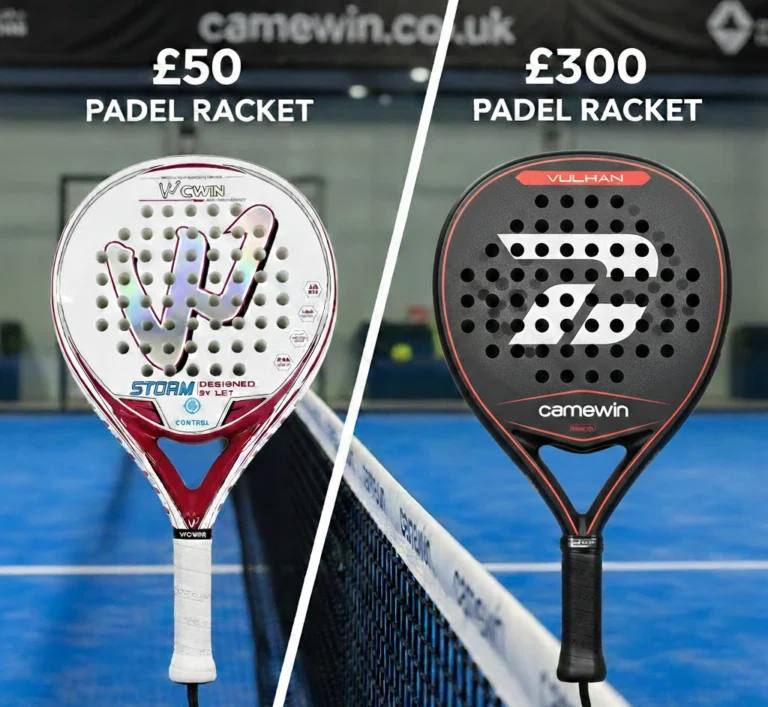
The solution to the fast ball is not retreat it is a tighter grip, a firmer wrist, and a shorter backswing. The position stays close. If you are still struggling to control these close-range exchanges, switching to a more forgiving basic padel racket with a larger sweet spot will give you the defensive stability and confidence needed to hold your ground at the net tape
The habit forms because players get hurt by the fast ball once, then move back permanently. The solution to the fast ball is not retreat it is a tighter grip, a firmer wrist, and a shorter backswing. The position stays close.
The Fix
- During net practice drills, mark the court 1.5 metres behind the net tape with a cone. That cone is your minimum net position during rallies. Do not retreat behind it.
- Practise the block volley racket face open, minimal swing, redirect the fast ball as a specific skill at close net range. Once you have the block volley, the fast ball stops forcing you back.
- When your partner lobs, hold the net position and trust the lob. Retreating to help cover the lob abandons net control and leaves neither of you in a good position.
Habit 4: Using the Same Shot Under Pressure
Every player has a go-to shot under pressure. For most club players, it is the high defensive lob — safe, high, and deep. The first time you throw up that lob under pressure, it works. By the fifth time in the same match, your opponents are positioned for it before you even swing.
Predictability is a technical problem that masquerades as a tactical one. Players think they are choosing the safe option. What they are actually doing is removing the element of surprise that makes any shot effective and handing their opponents a positioning map of exactly where to stand when you are in trouble.
The Specific Habits to Watch For
- Always lobbing cross-court from the back left corner under pressure.
- Always driving down the line when you receive a short ball mid-court.
- Always serving to the body on the deuce side.
- Always playing the first volley at net to the feet of the nearside opponent.
None of these shots are wrong in isolation. All of them become losing habits when they are your automatic response when your opponent can predict them before you decide to play them.
🎯 Elite Insight: Premier Padel players deliberately vary their shot selection on pressure balls not because they are trying a harder shot, but because unpredictability forces opponents into reactive positioning. Club players think variation is risky. At a high level, predictability is the bigger risk.
The Fix
- During practice rallies, set a rule: you cannot play the same shot to the same zone twice in a row from the back court. This forces shot variety in a low-stakes setting.
- Identify your two automatic pressure shots. In the next match, consciously attempt each of them’s opposite at least once per set. A cross-court lob player tries a drive. A line driver tries the lob. The opponent’s positioning recalibrates and so does yours.
- Review points you lost where you played your automatic shot. Ask: was there a higher-percentage alternative? You will often find there was and that the automatic shot was habit, not strategy.
.
Habit 5: The Mental Reset Problem
This is the habit that club players talk about the least and that costs them the most points. Padel is a fast-transition sport points are short, and the gap between them is shorter. The player who resets mentally between points faster than their opponent gains a structural advantage that has nothing to do with shot quality.
Most club players carry the previous point into the next one. Not deliberately but visibly. A net cord goes against you and your shoulders drop for the next two points. You miss an easy volley and your serve becomes tentative. You win a brilliant point and you rush the next serve. The emotional state of the previous point contaminates the execution of the current one.
What This Looks Like in Practice
Watch your body language between points. If your racket drops below your waist after a lost point, if your pace to the baseline slows, if you exhale loudly or look at the floor you are carrying it. Your opponent can see all of this. Experienced club players actively look for these signals because they tell them your mental state before the next point begins.
The other version of this habit is subtler: winning a good point and then playing the next one too aggressively, trying to replicate the winning feeling rather than executing the right tactical choice. Momentum is real but it only helps you if you direct it deliberately rather than riding it emotionally.
The Fix
- Develop a between-point routine and use it every single time win or lose. Walk to the back fence, adjust your grip tape, take one breath. The physical ritual creates a mental reset.
- Count to three after a lost point before moving. This sounds trivial. It is not. The three seconds break the emotional transfer.
- Look at your strings between points not the opponent, not the back glass, not your partner. Your strings did nothing wrong. Focusing on them is neutral, and neutral is what you need.
🧠 Performance Context: Sports psychology research consistently shows that inter-point reset quality is one of the strongest predictors of performance under pressure in racket sports. Players who reset fastest between points win more tight sets not because their shots are better, but because their execution is cleaner when the stakes are highest.
Stop Repeating the Same Mistakes — Start Playing Smarter Padel
These five habits are invisible right up until the moment you know to look for them. Then they are everywhere in your own game, in your partner’s, in every club match you watch. Awareness is the first fix. The drills and adjustments above are the second.
Work on one habit per training block. Do not try to fix all five simultaneously you will fix none. Start with the split step, because it is the most structurally fundamental and the fastest to improve with deliberate practice. Once your footwork is cleaner, the rest the positioning, the net game, the shot variety, the mental reset becomes significantly easier to address.
The best padel players are not the ones with the hardest shots. They are the ones who have eliminated the most invisible mistakes.