When padel club owners think about what drives long-term success, they almost always point to the visible things first: the courts, the booking system, the location, the facilities. These matter. But quality padel coaches are consistently the factor that separates clubs with strong long-term retention from those that fill courts for three months and then watch participation steadily decline. A coach shapes every player’s experience of your club far more directly than any piece of infrastructure does and in a sport where court occupancy and member loyalty are the two most critical business metrics, that is not a secondary consideration. It is the business model.
This is not an argument against investing in facilities. It is an argument for understanding which investment compounds fastest. Courts fill courts. Coaches fill courts, build community, retain members, generate referrals, and create the kind of club culture that makes players stay for years rather than seasons.
The clubs that are winning in 2026 are not the ones with the most courts. They are the ones with the best coaching systems and they know the difference between the two.
The Padel Market in 2026
Padel’s growth numbers are genuinely extraordinary. The FIP World Padel Report 2025 recorded over 35 million active players globally, a 16.1% increase in clubs, and more than 77,300 courts across 150 nations with 14,355 new courts built in 2025 alone. In the UK, major operators like David Lloyd now run padel across 47 clubs. The Playtomic and PwC 2026 Global Padel Report projects the padel club market reaching €6 billion by 2026.
The growth is real. But so is the consequence of it: players now have more choice than ever before. A new padel club opens near your existing one and your members have an alternative. Courts are no longer the differentiator. They are the baseline. What keeps a player choosing your club over the new one down the road is almost never the court surface. It is the coaching, the community, and the sense of personal development they feel when they walk through your door.
📊 2026 Industry Data: According to the Playtomic 2026 Global Padel Report, the padel market is entering a more mature phase where the challenge is no longer simply to build courts but to fill them sustainably. Club economics, member retention, and coaching quality are now the primary differentiators in established markets including the UK.
The Coach Is a Player's Primary Club Experience
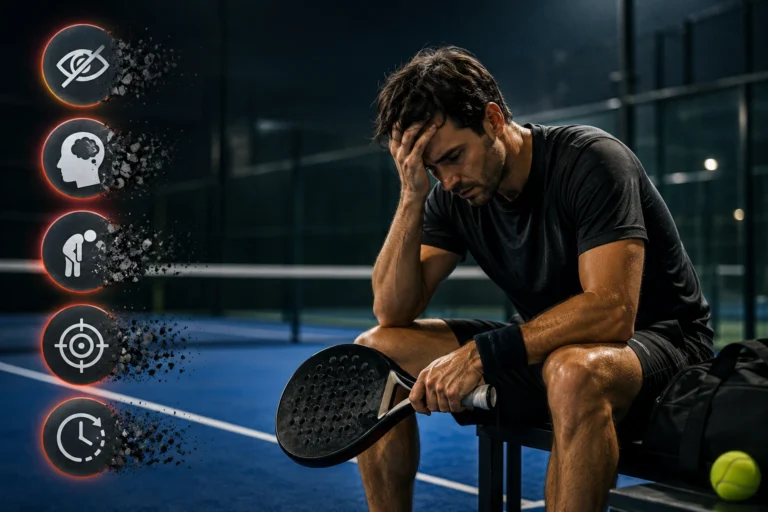
Think about what a new padel player actually experiences in their first three months at your club. They book a court. They play. They possibly join a beginner group session or take a private lesson. That group session or private lesson ,the coach running it becomes their primary reference point for the entire club.
Not the receptionist. Not the booking app. Not the café. The coach. The coach is the person who welcomes them to the sport, helps them improve, introduces them to other players, and guides them through the early frustration that every beginner experiences. Players do not just associate good coaching with good coaching , they associate it with the entire club. A great coaching experience at your venue creates loyalty to your venue. A mediocre one creates a player who plays padel just not necessarily with you.
What New Players Need From Their First Coach
- Patience with the learning curve beginners do not need a technically perfect session. They need to feel capable and welcome.
- Clear, simple instruction padel has a technical language that overwhelms beginners. Great coaches translate it into what the player actually needs to do with their body.
- Connection to other players , introductions, group activities, and social integration are as important as any technical improvement in the first six sessions.
- Visible progress markers players stay engaged when they can see they are improving. Great coaches create those moments deliberately, not accidentally.
 Retention Reality: Most clubs see the highest dropout rates within the first 90 days of a player joining. This is not primarily a technical problem. It is a relationship and progress problem. Coaches who actively track player progress and celebrate small improvements during this window see dramatically lower early dropout than those running generic group sessions.
How Quality Coaching Directly Drives Member Retention
Retention is the most important number in your club’s financial model. A member who stays for three years is worth roughly six times more than one who stays for six months and costs nothing additional to acquire. Everything that improves retention improves the economics of your club simultaneously. Quality coaching is one of the highest-leverage levers on that number.
The mechanism is straightforward. Players who feel they are progressing stay engaged. Players who plateau without understanding why disengage. A quality coach manages that plateau through varied session design, adjusted technical focus, new tactical challenges, and regular feedback conversations , so that progress continues even when improvement becomes less visible to the player themselves.
The Three Coaching Behaviours That Retain Members
- Structured progression pathways. Players who can see a clear development arc from beginner group sessions to intermediate clinics to competitive leagues have a reason to stay engaged at every stage. Clubs that create these pathways retain members at higher rates than those running one-size-fits-all group sessions indefinitely.
- Regular individual check-ins. A two minute conversation after a group session asking how a player feels their game is developing, what they are finding difficult, what they want to work on creates a relationship dynamic that no facility feature can replicate. Players who feel seen as individuals, not just as court bookings, do not leave clubs.
- Social integration. The most retained players at any padel club are those who have made friends through it. Great coaches accelerate this by creating mixed-ability sessions, round robins, and informal social events that connect players to each other not just to the coaching programme.
Coaches Build Club Culture
Club culture is one of those things that is difficult to define precisely but impossible to miss when it is present — or absent. It is the atmosphere in the changing room. It is how experienced members treat beginners at the net. It is whether the club feels inclusive or cliquey, high-pressure or relaxed, welcoming or indifferent. Players feel this within the first fifteen minutes of their first visit.
Quality coaches are the primary architects of that culture. They set the behavioural tone for the entire playing environment. A coach who treats every player regardless of level , with patience, respect, and genuine engagement creates a culture in which those values become the norm. A coach who visibly invests more attention in the stronger players creates a two-tier environment that beginners and intermediate players feel immediately — and quietly leave because of.
The Cultural Standards That Quality Coaches Establish
- Sportsmanship is how players behave after a lost point, toward opponents, and toward each other in doubles.
- Inclusivity is ensuring beginners and intermediate players feel as valued as the club’s competitive players.
- Communication standards is teaching players to communicate with their partner, not just to play alongside them.
- Attitude toward improvement is normalising mistakes as part of development rather than sources of frustration.
Over time, these standards become self-reinforcing. New members absorb them from existing members, who absorbed them from the coaches. The culture outlasts individual coaches and becomes the club’s most durable competitive advantage is the thing that cannot be replicated by a competitor who builds a nicer facility nearby.
Consistency Across Your Coaching Team
One exceptional coach can transform individual player experiences. A team of consistently high-quality coaches transforms the club. The distinction matters because most clubs beyond a certain size are running multiple coaches across multiple sessions and every inconsistency in that experience is felt by members who attend different sessions or move between programmes.
The goal is not uniformity. Coaches should have individual styles and strengths. The goal is baseline consistency across every session: the quality of the warm-up, the structure of the technical content, the standard of feedback, the way beginners are integrated into group dynamics. Players should receive a high-quality experience regardless of which coach they draw for a given session.
How to Build Coaching Consistency at Club Level
- Define and document your session structure not scripts, but clear frameworks that every coach follows. Warm-up format, technical focus, match play ratio, cool-down.
- Run regular internal coaching reviews sessions where your coaches observe each other and give structured feedback. Peer review improves quality faster than manager-led appraisals.
- Create shared player development records so when a player works with a different coach, that coach has context about what the player has been working on and where they are in their development arc.
- Invest in formal coach education and certification. Coaches who understand both the technical and the psychological dimensions of player development are meaningfully more effective than those who rely on playing experience alone.
💡 Club Operations Note: The strongest padel clubs in the UK are increasingly treating their coaching teams like a product with onboarding processes, quality benchmarks, and regular training investment. Clubs that do this consistently outperform on both retention and member satisfaction scores compared to those treating coaching as an unmanaged individual service.
The Revenue Connection
The financial case for investing in coaching quality is often underestimated because the connection between coaching and revenue is indirect .It runs through retention, referrals, and programme uptake rather than appearing as a direct line item. This makes it easy to deprioritise. It should not be.
Consider the revenue streams that quality coaching directly influences:
- Lesson and programme revenue. Players who trust and value their coach book more lessons, join more programmes, and upgrade from group sessions to private coaching. The coach relationship is the primary driver of this decision not the pricing or the court availability.
- Member referrals. Members who have had a genuinely excellent coaching experience refer their friends, colleagues, and family members at significantly higher rates than those with a neutral experience. Word of mouth is still the most efficient acquisition channel in club sports and it is almost entirely driven by experience quality.
- Event and league participation. Players who feel developed by their coaching are significantly more likely to enter club tournaments, join leagues, and participate in events. All of which generate direct revenue and deepen engagement simultaneously.
- Membership upgrades and renewals. A member who has a coaching relationship at your club is meaningfully less likely to leave at renewal than one who simply books courts. The coaching relationship creates switching costs. The player would not just be leaving a club, they would be leaving a coach who knows their game.
Equipping Your Players Well
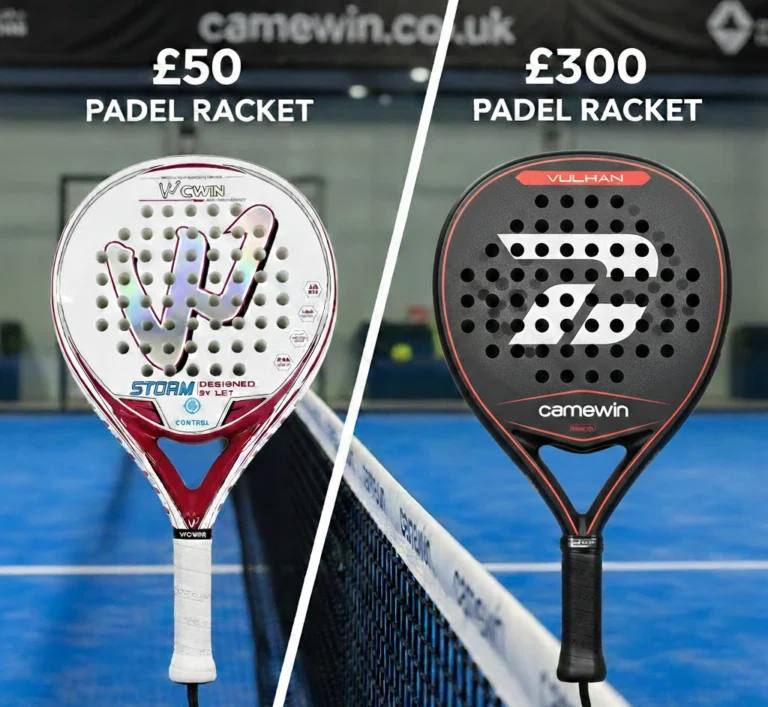
There is one dimension of player development that quality coaches address and under-resourced clubs consistently overlook: equipment guidance. A coach who understands the connection between racket choice and player development is delivering a meaningfully better service than one who ignores it because the wrong racket actively makes technical correction harder, increases injury risk, and slows the progress that keeps players engaged.
Most beginner players arrive at a club with either no racket, a borrowed one, or one they bought based on brand recognition rather than level-appropriate specification. A quality coach recognises this within the first session and steers the player toward a frame that matches where their game actually is not where they want it to be.
For clubs that want to offer this properly is giving coaches the ability to recommend and supply the right racket at the right moment in a player’s development . Having a reliable wholesale supply partner makes this practical rather than theoretical. Camewin’s wholesale padel racket supply for clubs and coaches provides level-matched frames across beginner, intermediate, and pro tiers, giving your coaching team a structured equipment pathway they can confidently guide players through. When a coach can say ‘this is the right frame for where you are right now, and I can get it for you’ that is a retention moment rather than sales.
Equipment and Retention: Players who are guided into the correct racket for their level by a coach they trust buy with confidence, experience better early progress, and associate both the improvement and the recommendation with your club. Equipment guidance is not a secondary coaching function .It is part of the value proposition that keeps players engaged through the early months when dropout risk is highest.
Investing in Coach Development
Many clubs treat coaching as a fixed input. Hire coaches, pay coaches, deliver sessions. The clubs that outperform their market treat coaching as a developing asset something that compounds in value when invested in consistently.
The return on coach education is disproportionately high. A coach who completes structured certification improves player outcomes, reduces dropout rates, delivers more consistent sessions, and stays at your club longer. Each of those outcomes has a direct financial value. The cost of the certification is typically recovered within one to two months of improved retention alone.
What Meaningful Coach Development Looks Like
- Formal certification through recognised padel coaching bodies is not just playing experience, but structured pedagogy.
- Regular internal observation and feedback help coaches watching each other and sharing what works creates a learning culture within your coaching team.
- Mental game education is understanding how players process pressure, confidence, and setbacks makes a coach significantly more effective at the moments that matter most for retention.
- Equipment literacy is important as coaches who understand the technical differences between frame tiers, core materials, and weight distribution can guide players more confidently and accurately.
- Business skills are understanding the connection between their coaching quality and the club’s financial performance motivates coaches to treat retention as part of their job, not just technique delivery.
What the Most Successful Padel Clubs Will Look Like in 2027 and Beyond
The padel market is entering a maturity phase in established markets like the UK. The Playtomic and PwC 2026 Global Padel Report is explicit about this: the challenge is no longer simply opening courts. It is filling them sustainably. Clubs that built their entire strategy around court supply are already feeling the pressure of that transition. Clubs that built their strategy around coaching quality, community, and player development are not.
As player choice increases and the novelty of the sport in the UK mainstream recedes, the clubs that retain their members will be those that have built something the competition cannot easily replicate: a coaching culture, a development pathway, and a community that players feel genuinely part of. None of those things are built quickly. All of them are built through quality coaches, consistently developed and consistently supported.
Build the Coaching
Courts are the infrastructure of a padel club. Coaches are the engine. A club with outstanding courts and mediocre coaching will attract players and then slowly lose them. A club with average courts and outstanding coaching will build a community that stays, refers, and grows.
The investment decision is not complicated once the numbers are honest. Coach development compounds. Retention compounds. Community compounds. Equipment partnerships that support your coaches deliver better player outcomes at lower cost. Every one of these is a lever on the same outcome: a club where players stay, improve, and bring other players with them.
Quality padel coaches do not just teach technique. They retain members, build culture, drive referrals, and make every other investment in your club more effective. That is not a soft benefit. That is the business model.

 Retention Reality: Most clubs see the highest dropout rates within the first 90 days of a player joining. This is not primarily a technical problem. It is a relationship and progress problem. Coaches who actively track player progress and celebrate small improvements during this window see dramatically lower early dropout than those running generic group sessions.