Yes cheap padel rackets under $100 are absolutely worth it, but only for the right player in the right situation. If you are new to padel, playing once or twice a week, and not yet sure whether you will stick with the sport, spending $300 on a premium frame makes no sense whatsoever. A well-chosen budget racket will not hold back your game at beginner level. What holds back beginners is technique not equipment. The honest answer is that most players below a 4.0 level will see almost no performance difference between a $70 racket and a $250 one. The differences that do exist are real, but they only become relevant once your game has developed enough to feel them.
That said, not all cheap padel rackets are created equal. There is a significant gap between a budget racket that is genuinely good value and one that is poorly built, unbalanced, and will make learning harder than it needs to be. This guide tells you exactly what that gap looks like and how to land on the right side of it.
The $100 question is not really about price. It is about knowing what you are buying and whether it matches where your game actually is right now.
What You Actually Get for Under $100
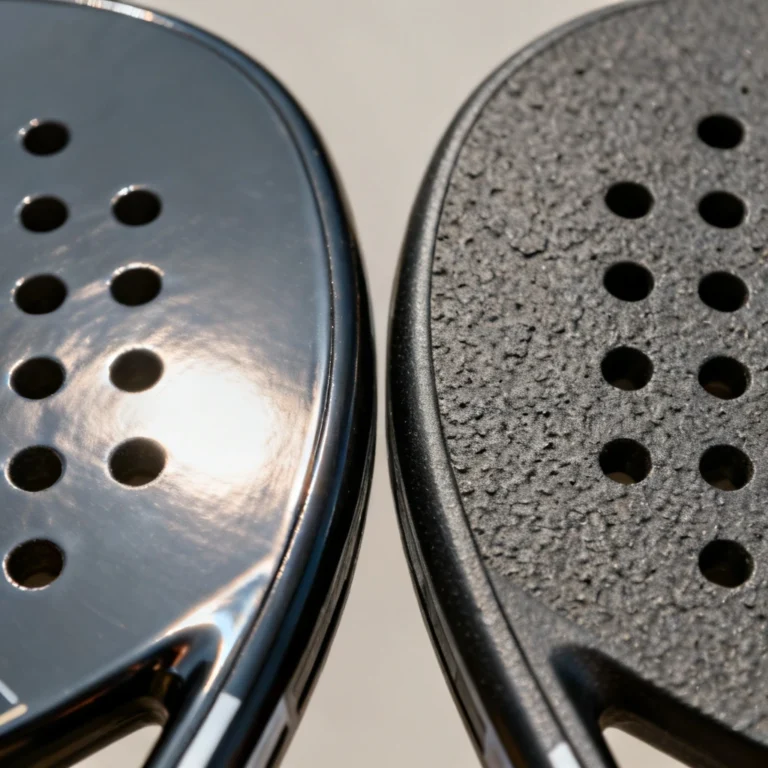
Budget padel rackets in the under-$100 range are almost always built with a foam core either EVA or a basic polyethylene blend and fibreglass faces rather than carbon. This combination is deliberate. It produces a softer, more forgiving feel that absorbs off-centre hits without sending vibration up your arm. For a beginner, that is exactly what you want.
What you give up compared to a mid-range or premium racket is primarily feel precision, durability under heavy use, and frame stiffness. A fibreglass face flexes more than carbon on contact. That flex dampens vibration which is good for comfort but it also reduces the information the racket sends back to your hand about where and how you contacted the ball. At beginner level, you will not notice this. At intermediate level, you will start to.
The Three Things Budget Rackets Do Well
- Absorb vibration softer cores protect your elbow and wrist during the early months when your technique is still developing.
- Forgive off-centre hits the larger, softer sweet spot means mishits do not punish you as hard as a stiff carbon frame would.
- Reduce financial risk you can try the sport properly for three to six months without committing to a premium investment.
The Three Things Budget Rackets Do Less Well
- Durability fibreglass faces chip and crack faster than carbon under regular court use. Expect a budget racket to last one to two seasons of moderate play.
- Touch on delicate shots the chiquita, the bandeja, and precise net volleys all benefit from a stiffer face that gives cleaner feedback. Budget frames make these shots harder to dial in.
- Power ceiling foam cores with fibreglass faces limit the trampoline effect that generates pace on smashes. Once your game develops to where power becomes relevant, you will feel the ceiling.
2026 Market Data: The padel racket market has grown significantly in the entry-level segment. In 2025, over 60% of new padel players globally purchased their first racket in the $50 to $100 range. Brand investment in this segment has improved quality noticeably budget rackets today are meaningfully better than the same price point five years ago.
Padel Rackets Under $100: Buying Guide
What to Look for in a Cheap Padel Racket
Not every racket under $100 is worth buying. Here is what separates a genuinely good budget option from one that will make your development harder.
1. Round Frame Shape
For under $100, always choose a round frame. Round shapes have the largest sweet spot, the most forgiving contact zone, and the most natural balance for a beginner. Diamond frames in the budget range are usually poorly weighted and actively difficult to use for developing players. Teardrop shapes are acceptable in the beginner padel racket range but only from brands that weight them correctly.
2. EVA Foam Core — Not Polyethylene
EVA (ethylene-vinyl acetate) foam is the better core material in the budget segment. It offers more consistent compression across the face, better vibration dampening, and a slightly more predictable ball response than the cheaper polyethylene blend some budget brands use.
3. Balanced or Head-Light Weight Distribution
A budget racket that is head-heavy puts unnecessary strain on your wrist and elbow during the learning phase. Look for a balance point of 260mm to 270mm from the handle. Head-light or even balance gives you control without fatigue the right priority when technique is still forming.
4. Weight Between 360g and 375g
This is the standard competition weight range and most quality budget rackets land here. Go lighter than 355g and you sacrifice power and stability. Go heavier than 380g and you risk arm fatigue. If the product listing does not specify weight, contact the seller or move on unlisted weight is a red flag on a budget frame.
5. A Brand That Stands Behind the Product
The budget padel market has attracted a number of unbranded, drop-shipped products with no warranty, no customer support, and no quality consistency between batches. Stick to brands with a clear padel background, genuine user reviews, and at least a 12-month warranty.
Mistakes Players Make When Buying a Cheap Padel Racket
Mistake 1 — Buying the Wrong Shape for Their Level
Diamond-shaped rackets are designed for aggressive, technically proficient players who generate their own pace and need a stiff frame to translate that into power. Putting a diamond-shaped budget racket in the hands of a beginner produces an uncomfortable, unforgiving experience that makes the sport harder to learn. Round frame. Always, at this price point.
Mistake 2 — Ignoring Grip Size
Grip size is one of the most overlooked specifications in the budget segment. An incorrect grip size even by one size forces the hand to compensate, which tightens the forearm muscles and is one of the leading contributors to tennis elbow in new padel players. Measure your grip size before buying and check the product specification. Most adults use a grip size of 2 or 3. When in doubt, size down , it is easier to build up a grip with overgrip tape than to shrink one.
Mistake 3 — Prioritising Looks Over Specifications
Budget rackets are increasingly well-designed visually. Aggressive graphics, professional-looking colour schemes, and premium-sounding product names are marketing not performance indicators. Two rackets that look completely different may have identical cores and faces. Two rackets that look similar may have very different weight distributions. Read the specs, not the aesthetics.
When Should You Stop Using a Budget Racket
Most players upgrade too early, chasing the idea that a better racket will fix a technique problem. A small number upgrade too late, holding onto a frame that has genuinely started to limit their development. Here is how to know which side you are on.
You are ready to upgrade when:
- You can consistently execute the split step, chiquita, and basic lob with reliable technique — and you are starting to feel that your racket does not give you clean feedback on the shot.
- You are playing three or more times per week and your budget racket is showing visible wear — chips on the face, frame flex that was not there before, grip compression.
- Your shots feel mechanically correct but the ball is not responding the way you expect particularly on soft touch shots at the net. This is the performance ceiling of the budget frame, and it is the clearest sign of its limitations. that you are ready for the intermediate padel rackets .
You are NOT ready to upgrade when:
- You are still losing points to positioning errors, footwork mistakes, or inconsistent swing mechanics then the racket is not the problem.
- You have been playing for less than four months and you have not yet developed the sensitivity to feel the difference between frame tiers.
- Your budget racket is structurally sound and less than 18 months old with regular play but there is still performance left in it.
Coach Tip: The fastest way to test whether you need a new racket: borrow a mid-range frame from a club partner for one session. If your game feels meaningfully different , cleaner feedback, better touch, more consistent direction you have outgrown the budget tier. If the session feels roughly the same, keep the money and keep practising.
The Verdict: Are Under $100 Padel Rackets Worth It?
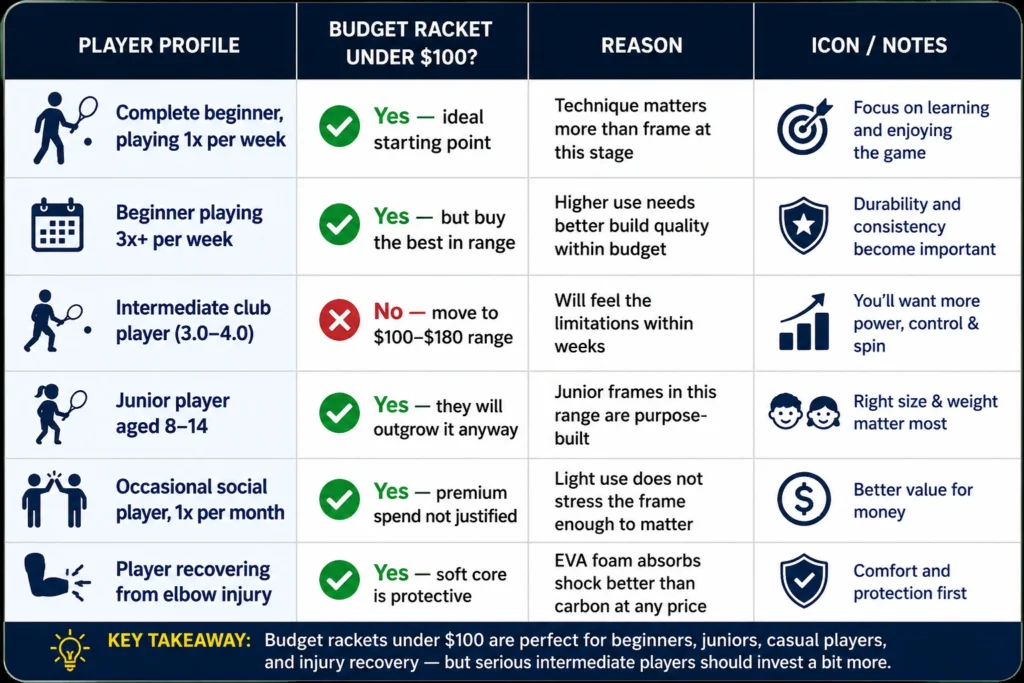
The real question is not whether cheap padel rackets are good, but whether you are buying the right tool for your current skill level. If you are a beginner, a casual social player, or just testing the waters of the sport, choosing a budget-friendly racket is actually your smartest move. These options are much gentler on your arm during the learning phase and are highly forgiving when you inevitably mishit the ball while developing your technique. Most importantly, it saves you hard-earned money until your skills grow to a point where a premium upgrade will actually make a meaningful difference on the court.
When shopping for a budget racket, buying smart means focusing on a few key specifications rather than a flashy design. You should look for a round frame because it offers the largest, most forgiving sweet spot for learning control. Ensure the core is made of soft EVA foam to absorb shock and protect your joints, and confirm that the total weight sits comfortably between 360 grams and 375 grams. Always choose an established brand that backs its products with real customer reviews and a solid warranty. Ultimately, the best padel racket is not the one with the most expensive spec sheet it is simply the one that matches how you play right now, allowing you to master your technique before investing in an upgrade.