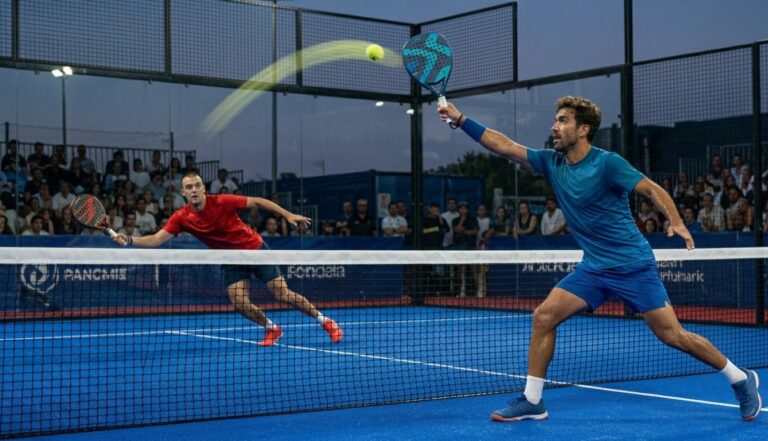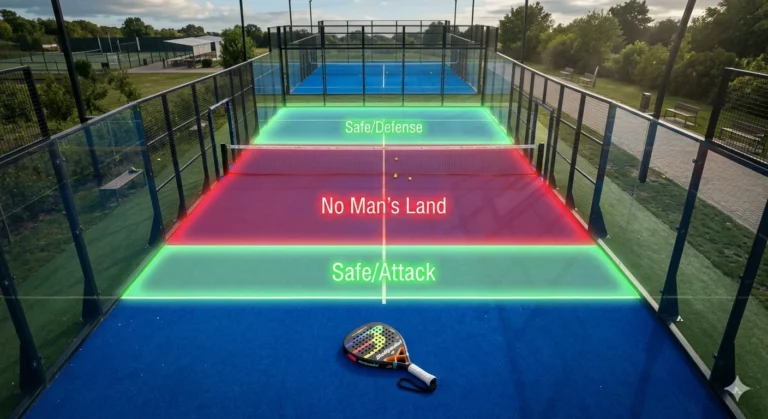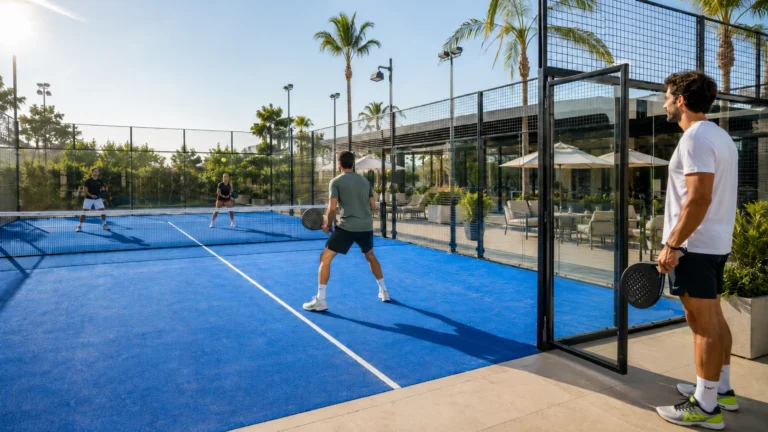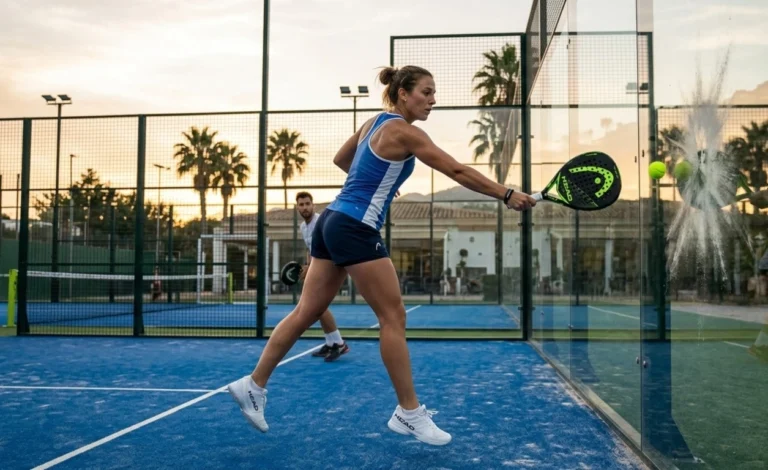
If you come to padel from a tennis background, the overhead smash is the shot that will feel most familiar and the one that will mislead you most. The mechanics look similar from the outside. High ball, overhead swing, racket driven through contact. But the padel smash and the tennis overhead are built on fundamentally different tactical logic and applying your tennis overhead instincts to a padel court is one of the most consistent reasons experienced tennis players plateau early in their padel development.
Understanding exactly where these two shots diverge in technique, in purpose, in court geometry, and in what happens after the ball lands is the fastest way for a tennis player to unlock their padel smash. It also matters for players who have learned padel first and want to understand the context behind why the shot is taught the way it is.
An estimated 40% of new padel players in the UK come from a tennis background. Coaches across Premier Padel academies in Spain and the UK consistently identify the overhead smash as the shot where tennis transfers most frequently create problematic habits because the shot looks identical but functions entirely differently.
The tennis overhead ends the point. The padel smash often begins the next phase of it. That single difference changes everything about how you should hit it.
The Objective of the Shot Is Fundamentally Different
In tennis, the overhead smash has one primary objective: end the point immediately. A well-struck tennis overhead at full pace from mid-court lands deep, bounces high, and gives the opponent essentially no time to return it. The shot is designed to be a winner and it usually is.
In padel, the equivalent shot almost never ends the point on contact. The enclosed court means the ball can and usually does continue off the back or side glass, giving opponents a second chance at returning even a well-struck overhead. The padel smash is therefore not primarily a winner it is a pressure shot. Its objective is to create a ball that bounces awkwardly off the glass in a position the opponent cannot handle, or to push opponents so deep that your pair can put away the next ball at the net.
This tactical shift is the single most important adjustment tennis players must make. Trying to end every point with a maximum-power padel smash the tennis instinct produces smashes that fly out, bounce harmlessly off the glass at a recoverable height, or exhaust the player physically from swinging at full effort on shots that do not need it. The advanced padel rackets used by top professional pairs are selected specifically to maximise placement and controlled power not raw pace on overheads.
🧠 Mindset Shift: Before every padel smash, ask: ‘Where do I want this ball to go after the glass?’ Not ‘how hard can I hit it?’ Answering the first question changes your shot selection, your power level, and your tactical outcome simultaneously.
The Glass Wall Changes the Entire Tactical Calculation
Tennis courts have no back wall. If the ball goes past the baseline, the point is over. In padel, the back glass and side glasses are live and an intelligently targeted smash uses them as an extension of the tactical court. A smash aimed to bounce low into the back corner uses the glass to create a ball that rises at an awkward height and angle, forcing the opponent into a defensive return from a position where good attacking options are severely limited.
The Three Glass-Based Smash Targets in Padel
- Back glass corner: Aim the smash so it lands in the back third of the court and kicks low into the corner. The glass return produces a ball that rises awkwardly across the body difficult to drive, easy to mishit.
- Side glass:A smash angled toward the side glass creates a lateral bounce that moves away from the opponent’s natural recovery position. Particularly effective against players who position centrally.
- Body smash: Aimed directly at the opponent’s shoulder or hip the glass wall is irrelevant; the objective is to eliminate their swing room entirely. Most effective when opponents are positioned close to the back glass.
📐 Glass Geometry Drill: In practice, deliberately smash toward each corner and note the bounce trajectory. Every padel court’s glass has slightly different properties understanding your home court’s glass angles is a genuine competitive advantage that experienced players develop over time.
Padel Has Three Distinct Smash Variants — Tennis Has One
The tennis overhead is essentially one shot with variations in power and placement. Padel has three mechanically distinct overhead types, each designed for a different tactical situation and knowing which to use when separates reactive padel from intelligent padel.
The Rulo (Flat Power Smash)
The closest equivalent to a tennis overhead. Full swing, maximum pace, aimed to bounce low and fast into the back corner or body. Used when the lob is short, the player has time to set up, and the objective is to push opponents onto the defensive with pace. This is the smash most tennis players default to and it is appropriate in padel only in specific situations, not as the universal answer to every high ball. Players using intermediate padel rackets with a mid-balance teardrop frame typically find the rulo their natural starting overhead as they develop padel-specific smash mechanics.
The Bandeja (Tray Smash)
The bandeja is the shot tennis players have no equivalent for and the one that takes the longest to learn. Hit with a sliced, sidespin racket face rather than a full flat drive, the bandeja produces a low, skidding bounce with lateral movement that is very difficult to attack. Critically, it allows the hitter to stay at or recover quickly to the net something a full rulo swing makes difficult. The bandeja is the tactically dominant overhead in modern professional padel in 2025 and 2026 precisely because it combines pressure with net retention.
The Bajada (After-Glass Smash)
Unique to padel. The ball has already bounced off the back glass and is descending — instead of playing a defensive lob, the player drives it aggressively down the line or cross-court as it drops to waist height. It turns a defensive position into an instant counter-attack. No tennis equivalent exists because tennis has no back glass — which is why this shot is the hardest for tennis players to even conceptualise, let alone execute.
Maximum Power Is Frequently the Wrong Choice in Padel
In tennis, hitting an overhead at 90 to 100 percent power is almost always correct the court is large enough that a powerful smash directed away from the opponent is a reliable winner. In padel, the court is enclosed and shorter, which means a maximum-power smash aimed poorly bounces off the glass at a comfortable height for the opponent to recover. Pace without placement is not just ineffective in padel it actively helps your opponents by giving them a faster ball off the glass with more energy to redirect.
The padel overhead is most effective at 70 to 80 percent of maximum power, with placement and glass geometry as the primary variables. This is counterintuitive for tennis players who have spent years training the opposite instinct. It is also one of the reasons that players who come from padel — rather than transitioning from tennis often develop overhead consistency faster: they have never learned to prioritise power over placement. A beginner padel racket with a round frame and soft core actually reinforces this correct padel instinct: the frame’s lower power output encourages placement-focused smash development from the start, rather than relying on pace that the beginner frame cannot generate anyway.
Power Calibration: In your next padel session, deliberately smash at 60 percent power and focus entirely on hitting a specific glass target. Count how many of those smashes produce genuinely difficult returns. Then compare with your full-power smashes. The controlled version almost always wins more points.
The Equipment Creates Different Physical Demands
A padel racket and a tennis racket create entirely different physical dynamics on overhead contact. A strung tennis racket weighs 280 to 310 grams and has a large string bed that generates power through string deflection. A padel racket weighs 360 to 380 grams total with a solid foam core it generates power through frame momentum and head weight rather than string rebound. This means the padel smash demands more rotational load through the shoulder and wrist than the equivalent tennis overhead, particularly on the bandeja where the sliced contact requires precise wrist control through a motion that has no tennis counterpart.
Tennis players transitioning to padel frequently experience shoulder and elbow fatigue in their first months of regular play not because they are unfit, but because the padel overhead uses the rotator cuff and forearm in different patterns than tennis. A padel racket chosen with arm comfort in mind round frame, soft multi-layer core, mid balance significantly reduces this transition fatigue. As smash mechanics develop and physical adaptation occurs, moving to a more specialist overhead frame in the intermediate padel racket or advanced padel racket range becomes appropriate.
What Actually Transfers From Tennis — and What Needs Unlearning
Transfers Well
- Trophy position preparation:The high elbow, racket-behind-head ready position is identical in both sports. Tennis players already have this ingrained.
- Contact point awareness:The principle of hitting the ball in front of the shoulder at arm’s extension applies equally to both sports.
- Continental grip: The standard overhead grip in tennis is the correct padel overhead grip no adjustment needed.
- Body rotation mechanics: Hip-to-shoulder kinetic chain on the overhead is structurally identical the physical pattern transfers directly.
Needs Deliberate Unlearning
- Maximum power as the default:In padel, placement and glass geometry beat raw pace. Consciously reduce power and focus on target on every smash for the first three months.
- Expecting the point to end on contact: In padel, always be ready to play the next shot after your smash. Staying at the net after the overhead is correct positioning retreating to watch the ball is a tennis habit.
- Using only one overhead type:The rulo alone is insufficient in padel. The bandeja must be learned it is the dominant overhead in the modern professional game and the shot that retains net position.
The Bottom Line: Same Shape, Completely Different Game
The padel smash and the tennis overhead share a preparation position, a grip, and a general swing arc. Everything else the objective, the power level, the shot variants, the tactical context, the role of the glass wall, and the physical demands of the racket is different. Tennis players who recognise this early and deliberately adapt their overhead instincts are the ones who progress fastest in padel. Those who apply their tennis smash unchanged spend months confused by why a shot they have played for years suddenly stops working.
The adaptation is not technically difficult. It is conceptually difficult it requires overriding strong, well-practised instincts with a different set of priorities. Start by reducing power, targeting the glass, and learning the bandeja as a separate shot. Build from there. The mechanics you already have from tennis will become a genuine advantage once the tactical framework of the padel overhead is in place.
In tennis the overhead ends rallies. In padel it shapes them. Master that difference and your smash becomes the most powerful tactical weapon on the court.