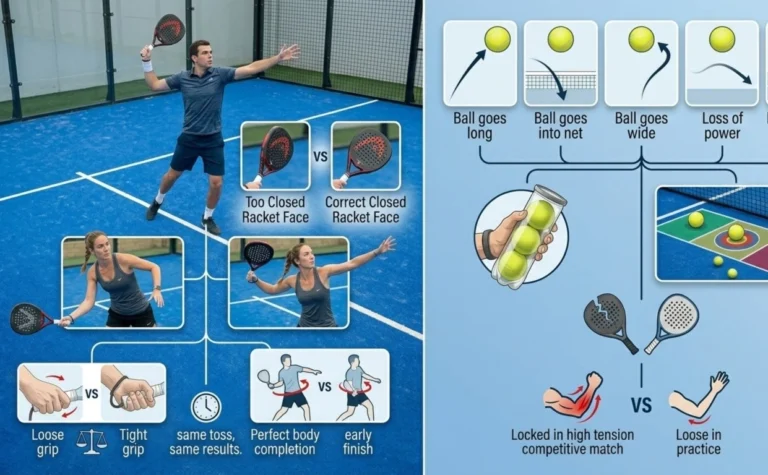
A padel losing streak does not mean your game has collapsed. It means your mental response to pressure has temporarily taken over your decision-making and that is a much more fixable problem than most players realise. The matches you are losing right now are not being decided by your technique. They are being decided by what happens in your head between points, after a mistake, and in the ten seconds before you serve at 30-40. Fix that layer and the results change. This guide tells you exactly how to do it step by step, without vague advice about positive thinking.
Every serious padel player goes through a losing run. What separates the ones who come out stronger is not talent , it is knowing specifically what to address, in what order, and why. Let us go through it.
A losing streak in padel is not a verdict on your ability. It is information. The players who read that information correctly come back sharper than before.
Why Padel Losing Streaks Happen
Most players assume a losing streak means something technical has broken down. They change their grip, try different shots, experiment with new tactics and get worse. The reason is that they are solving the wrong problem. The majority of padel losing streaks are not technical. They are psychological and they follow a very specific pattern.
It starts with one or two tight losses that could have gone either way. The player begins to focus on outcomes rather than execution. Decision-making becomes reactive , driven by fear of losing the next point rather than clarity about what the right shot actually is. Confidence drops. Errors increase. The streak continues and feels increasingly inevitable.
The Four Psychological Triggers Behind Most Losing Streaks
- Playing not to lose instead of playing to win. These look identical from the outside but produce completely different shot selections, court positions, and risk tolerances. Playing not to lose means every decision is filtered through ‘what is the safest option’ rather than ‘what is the right shot here.’ The safest option is rarely the best one.
- Loss of process focus. When results become the primary measure of performance, players lose the ability to evaluate what they are actually doing well. You can play an excellent match and lose. You can play poorly and win. Players in a losing streak almost always conflate the two , assuming every loss means they played badly, which is often not true.
- Negative inter-point carry. A missed volley at 30-30 follows the player into the next point. A bad game follows them into the next set. The emotional residue of one moment contaminates the execution of the next. This is the single most damaging mental pattern in club padel and also the most invisible.
- Overthinking technique mid-match. Players in a slump often start consciously analysing their swing mechanics during points , the worst possible time. Technique is built on court in practice. In a match, it has to run automatically. As soon as conscious thought interrupts an ingrained pattern, execution degrades immediately.
Sports Psychology Research: A 2024 peer-reviewed systematic review of attentional focus strategies in racket sports published in PLOS ONE found that players who shift to an internal, outcome-focused mindset show consistent, measurable drops in both motor skill execution and decision-making quality. The shift happens within as few as three consecutive losses and so can the reversal, once a player consciously returns their attention to process rather than result.
Stop Measuring Your Level by Wins and Losses Alone
This is the first and most important mental reset. Results in padel are influenced by dozens of variables you cannot control — opponent quality on a given day, your partner’s form, court conditions, the score at critical moments. Judging your entire level by the outcome of matches you may have played well in is one of the fastest routes to a prolonged slump.
Replace the outcome question — did I win? with three process questions after every match:
- Did I choose the right shot in the critical moments or did I play defensively because I was nervous?
- Was my court positioning disciplined throughout or did I drift into no man’s land when the pressure increased?
- Did I stay patient during extended rallies or did I try to force the point before the right moment arrived?
These questions are fully within your control. A player who answers all three well but still loses is not in bad form they are being tested by a stronger opponent or tighter margins. That is a completely different situation from genuinely poor play, and treating them as identical is what turns a temporary rough patch into a three-month slump.
🎯 Practical Tool: After your next three matches, score yourself 1 to 5 on each of the three process questions above , regardless of the result. Track the scores. You will almost certainly find your process scores are higher than your win rate suggests which is the evidence you need to recalibrate your confidence.
Simplify Your Game
When form drops, the instinct is to add. Try a new serving pattern. Experiment with a different return position. Attempt shots you have been working on in practice. This instinct is wrong and acting on it almost always extends the losing run.
Confidence in padel is rebuilt through repetition of things you already do well not through the successful execution of things you are still learning. During a losing streak, your game needs a foundation it can rely on. That foundation is your most consistent, highest-percentage version of yourself not the version you are trying to become.
What Simplifying Actually Looks Like
- Use the lob more frequently as a reset shot. It buys time, forces opponents back, and reduces your error count immediately. Players in a slump who use the lob deliberately almost always see their unforced error count drop within one session.
- Serve to the same target every first serve for a full match. Consistency over placement variety. Once your first serve is going in at 80% or above, add variation. Not before.
- Return to your most reliable rally shot the one that has the highest percentage across all conditions and build points from that instead of looking for early winners.
- Stop attempting net approaches on medium-quality balls. Wait for the clear opportunity. Patience is a tactical weapon, not a passive default.
📊 Club Level Pattern: Analysis of club padel match data consistently shows that players recovering from losing streaks win more points not by playing better shots but by making fewer unforced errors. A 20% reduction in unforced errors has a larger impact on win rate than almost any technical improvement. Simplicity is a performance strategy.
Find the Tactical Problem
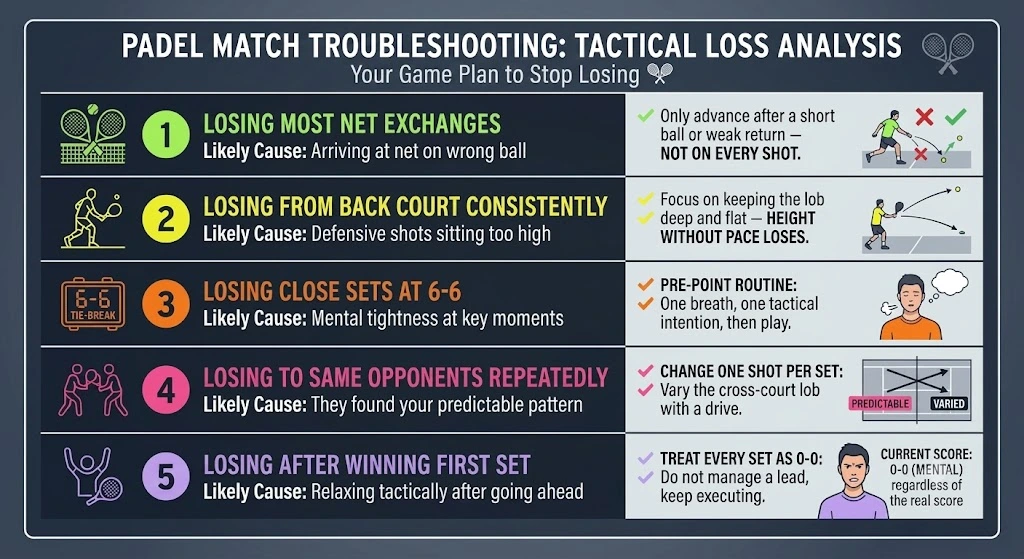
Not every losing streak is purely psychological. Some have a genuine tactical cause a pattern your opponents have identified and are exploiting consistently. The difference between a mental slump and a tactical problem is this: if different opponents are beating you the same way, it is tactical. If you are losing tight matches to players you normally handle, it is mental.
How to Identify the Tactical Cause
- Are you losing most points from the net or from the back court? Net losses usually point to positioning errors arriving at the net on a ball that was not good enough to attack. Back court losses usually point to defensive shot selection lobbing when a drive was available, or driving when a lob was needed.
- Are you consistently losing the third shot of the point? This is one of the most common tactical problems at club level .The return of serve lands short, your opponents attack it, and you are already under pressure by the third ball. The fix is return depth, not anything else.
- Is one specific zone on the court costing you repeatedly? Most players in a losing streak have a hole , a position or shot combination that opponents have found and return to. Watch one of your matches on video and look for the pattern. It will almost always be visible within 15 minutes.
Fix What Happens Between Points
The padel court is a fast environment. Points are short. The gap between them is even shorter. But that four to ten seconds gap between the end of one point and the start of the next is where a significant portion of match outcomes are decided. Players who use it deliberately perform better under pressure. Players who carry the previous point into the next one leak confidence at a rate they almost never notice.
A between-point routine is not a sports psychology concept reserved for professionals. It is a practical performance tool that any club player can implement in their next match with zero practice required. The routine does not need to be complex. It needs to be consistent.
A Simple Between-Point Routine That Works
- Step 1 — Physical anchor: Look at your strings immediately after the point ends . This breaks eye contact with opponents, removes social pressure, and gives you a neutral focal point. Ten seconds on your strings resets the nervous system faster than most players expect.
- Step 2 — One breath: A single slow exhale. Not a performance but a genuine release of the tension that accumulated during the previous point. This is the fastest physiological reset available in a match situation.
- Step 3 — One intention: Before moving into position for the next point, set one clear tactical intention. One intention keeps the mind occupied with process rather than outcome.
- Step 4 — Move deliberately: Walk and do not rush to your position. Pace communicates confidence to your partner and, more importantly, to yourself. Players who rush between points are physiologically and mentally less ready to execute when the next rally begins.
💡 Why This Works: Inter-point routines reduce what sports psychologists call emotional bleed , the carry-over of negative emotion from one point to the next. Research in racket sports shows that players with a consistent between-point routine make better tactical decisions in the first three shots of each point precisely because they enter the point without the emotional residue of the previous one.
Rebuild Confidence Through Evidence
Confidence in sport is not a feeling you choose to have. It is a conclusion your brain draws from accumulated evidence. You cannot think your way into confidence. You build it through repeated, successful execution of specific, measurable things and then your brain updates its assessment of your ability.
This is why generic advice like ‘believe in yourself’ does nothing during a losing streak. It offers no evidence. It does not update the brain’s model of what you are capable of. What does update that model is a specific win
A Note for Coaches and Club Managers
If you coach padel or manage a club programme, losing streaks in your player group are worth taking seriously — not just for the individual player, but for the health of your broader programme. A player stuck in a losing run who does not receive the right guidance tends to disengage from the sport entirely within three to four months. The dropout rate among club players who hit a confidence slump without support is significantly higher than among those who receive structured coaching intervention.
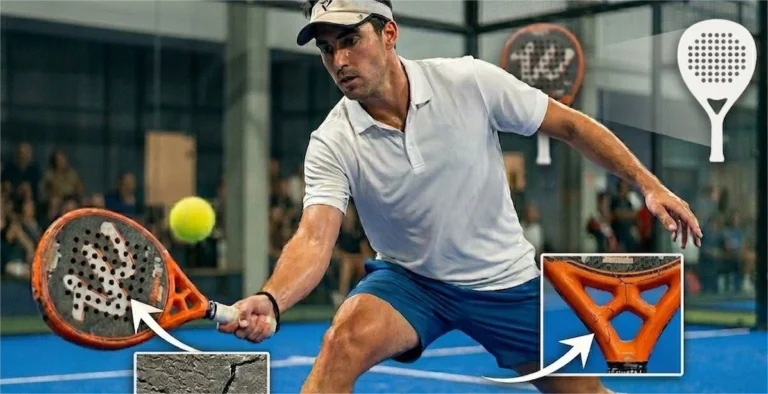
The two most effective interventions at club level are structured mental game sessions — teaching players the between-point routine and process focus principles above — and equipment reviews. A surprising number of players in losing streaks are playing with a racket that is genuinely wrong for their current level: too stiff, too heavy, or too head-heavy for where their technique actually is. The mismatch creates physical discomfort and inconsistent feedback that amplifies technical errors and makes the mental recovery harder.
For clubs and coaches who supply rackets to their player group or who want to offer a proper equipment pathway as part of their development programme . Camewin’s wholesale padel racket supply gives you access to level-matched frames across beginner, intermediate, and pro tiers. Having the right racket available at the right moment in a player’s development is not a minor detail .It is one of the most practical things a club can do to support players through exactly the kind of confidence dip this article describes.
Your Next Match Is a Fresh Start
A padel losing streak ends the same way it started .One point at a time. The difference is that you now know what to look for. You know the difference between a mental slump and a tactical problem. You know that results and performance are not the same thing. You have a between-point routine that interrupts the emotional bleed. And you have a process for building confidence through evidence rather than waiting for it to return on its own.
Take one thing from this guide into your next match. Not all of them . The between-point routine is the highest-leverage starting point for most players because it costs nothing, requires no practice, and produces results immediately. Try it from the first point of your next match and evaluate it at the end of the set. The data you collect from your own game is more valuable than any general advice including this.
Slumps pass. Stronger versions of your game emerge on the other side. The only players who do not come back are the ones who stop showing up and you are here, which means you are already ahead of them.
If you are a beginner still finding your feet in the game, starting with the right equipment removes one significant variable from your mental load. Camewin’s beginner padel racket range is built to be forgiving when technique is inconsistent which is exactly what a player in the early stages of building confidence needs.